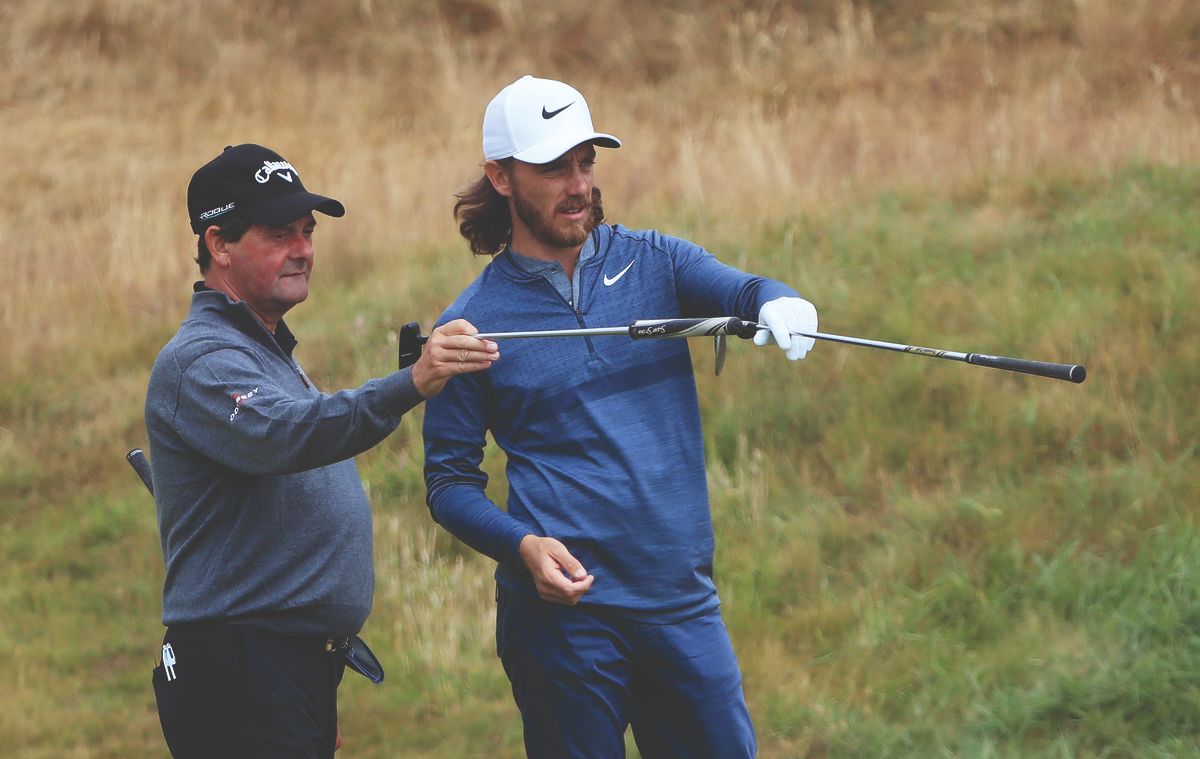

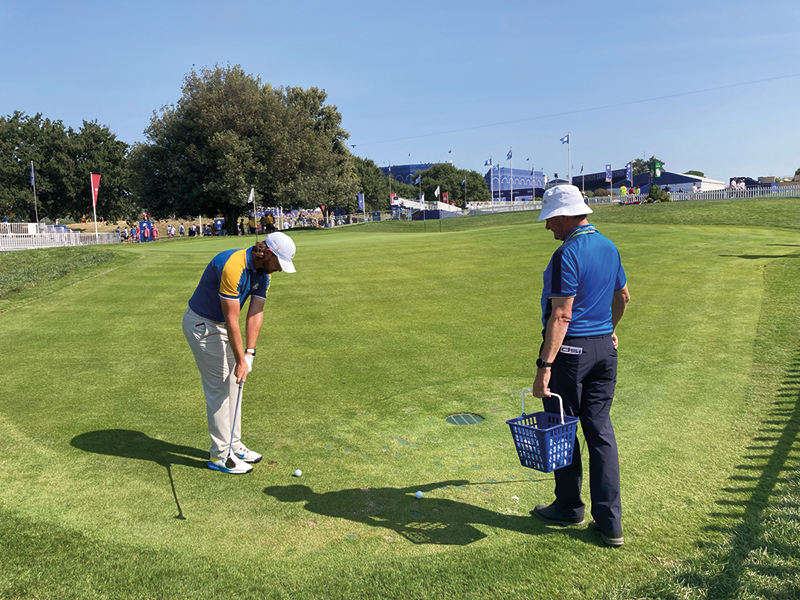
When Tommy Fleetwood steps up to a critical short game shot at the 2025 Ryder Cup, he won’t be alone.
While the players command the spotlight, it’s the PGA Members like Graham Walker who quietly shape their success. Based at The Oaks near York since 2004, Walker served as England’s lead coach for over a decade, guiding talent from DP World Tour winners to Masters Champions. Among his most notable partnerships is with Tommy Fleetwood, whose short game Walker has refined into a formidable weapon — ranking him among the PGA Tour’s elite around the greens.
Twice named England Golf Coach of the Year, Walker’s analytical approach and dedication to player development have been instrumental in Fleetwood’s rise, helping him become the PGA Tour’s No.1 scrambler in 2019. In 2025, Fleetwood remains a force on tour, currently ranked 23rd in strokes gained around the greens.
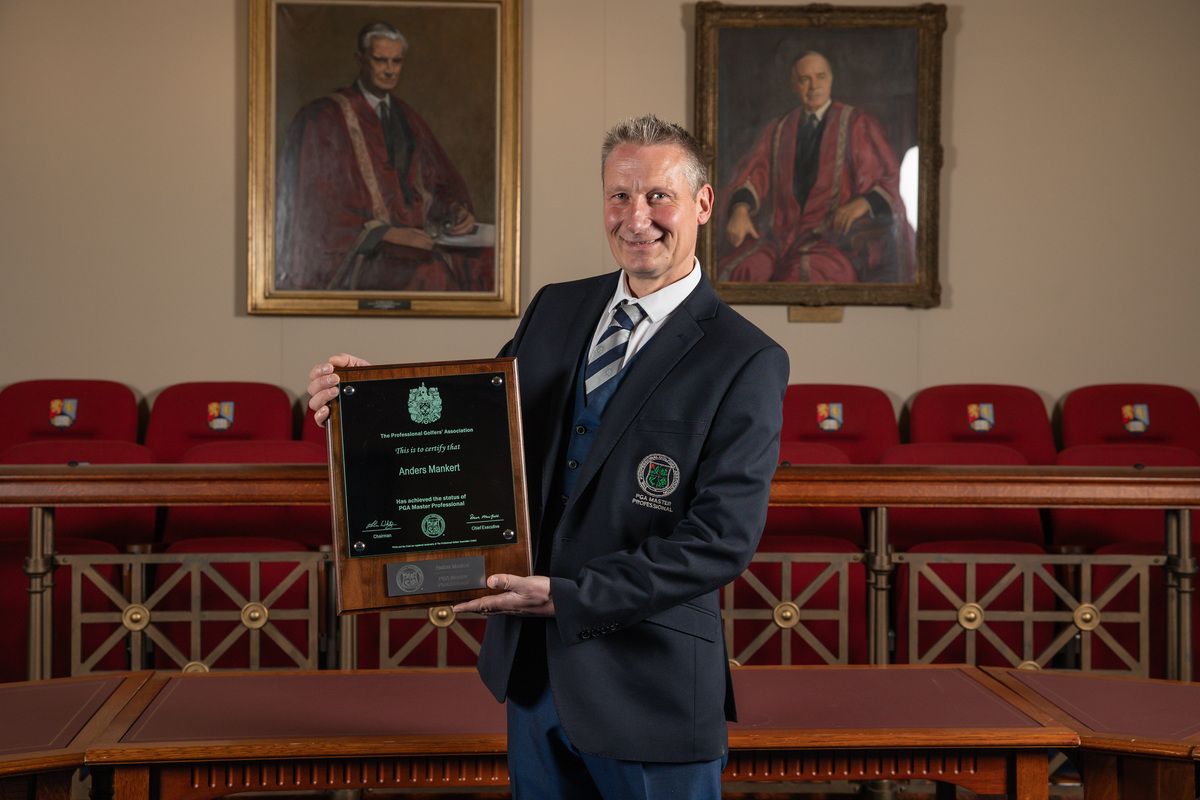
Here, Walker, a PGA Master Professional, shares insights from his journey with Tommy, the philosophy behind their work, and the mindset required to excel when the stakes couldn’t be higher.
TOMMY'S 20
Tommy wants to know how good he’s doing at something. When he first came to me, he wasn’t as good as he wanted to be. Since then, he’s flourished – the stats show it. I think he was No.1 around the greens on the PGA Tour a couple of years back. When I first started working with him, he didn’t have that many shots and he couldn’t control the ball that well in his short game.
We’d worked together a bit with England years before and it was the same thing – he didn’t have a lot of variety. I felt he needed more shots, so one of the first things we did was create what we call ‘Tommy’s 20’ so that he had that variety of high, low etc., and we’d work on having shots for every type of situation and lie.
Somebody once said that coaching is having other people’s fun and I’ve had a lot of fun coaching him over the last few years. It’s very pleasing that somebody like him can take on the skills we’ve been working on and take ownership of it.
MY SHORT GAME LITTLE BLACK BOOK
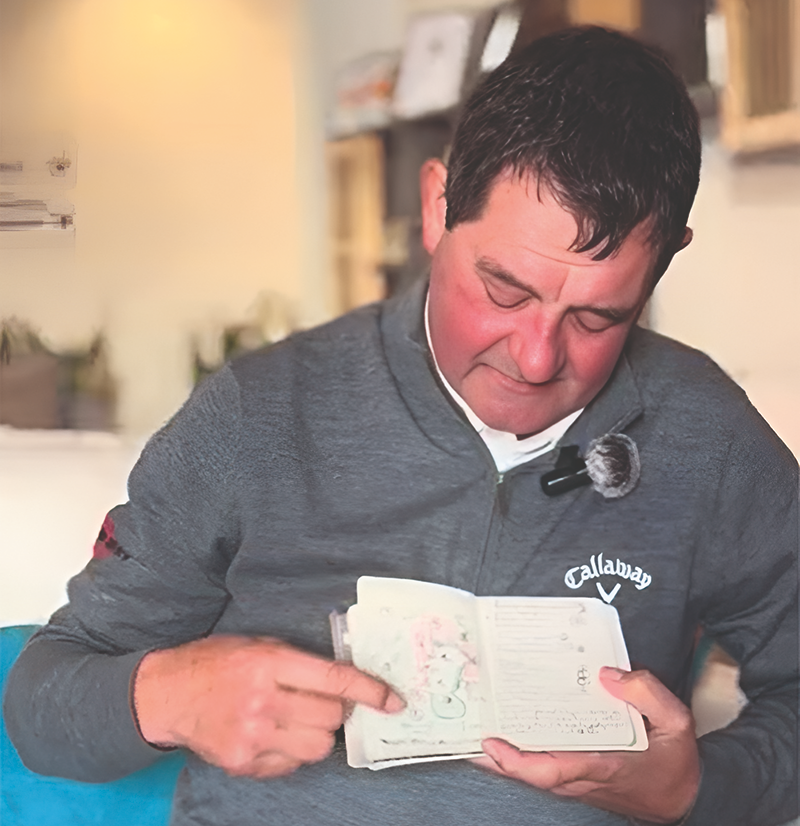
Here’s the last Ryder Cup one. [Shows drawing and notes in the book]. I’m no Picasso, by the way, but I do this for every golf tournament that we go to. That’s the Marco Simone practice short game area. And these are the shots. And they’re the numbers of where he could hit the shots. And they’re the flights and they’re all the distances.
If you want to be a great short game player at your own golf club, draw out a green that you practice on or around. The reason that I add the numbers is so that if he asks a question, I know exactly where to go to set up that practice.
At The Oaks, I know exactly where to go – it’s my playground. So I know where all the rough shots are, I know where the best bunker shots are. And we create all of those things and log all the shots.
We’ve done some putts as well. On another session it might be 100 shots over a few days that we’ve done challenges for, and I’ve recorded them, I’ve put them in the app and we can see who’s got the record.
Tommy’s now set a new world record for what we call a ladder drill. This is where you hit a shot 50 yards, then 60, then 40… all the way up and down. It calculates a score vs par.
He was 16.5 under par and was 28.8 yards total difference for 15 shots. No one else has got anywhere near 30 for that. And with a couple of shots to go he knew it was going to be very close to break 30 and he hit one to within 0.8 yards of 140. There was a lot of noise and things happening around him but he just got into this little cocoon and nailed it. It takes a special type of player to have that level of concentration.
MAKING MISTAKES
You are only really going to learn if you try to stretch yourself a little bit. It requires error. Errorless learning is limited. If you don’t make mistakes, or are not prepared to have a go, you will never learn.
I say this as much to good players as I do to 10 handicappers. If you are not prepared to have a go at it today, when will you have a go at it? Most of the time, they never do.
I was at The Honda with Tommy a few years ago and we had just started talking about hitting this bunker shot with a wide open face from tight sand, which there was that week. A short-sided, lofted shot. Putting the club closer to the ball to create more spin.
During the week he hits it short-side on a long par 4. I stood behind him and I thought, he’s only going to go and have a go at this right now. He knocks it out to about three or four feet and rolls the putt in. He misses the next green just up the left side, knocks it out to a few feet and makes up and down.
You’ve got to inspire them to have the confidence to have a go at stuff as soon as they’ve learned it, and set up practice so they feel that when they go on the golf course they can take on these shots. So my mantra is: if you won’t have a go at it today, when will you have a go at it?
INTERACTION AND COOPERATION WITH OTHER COACHES
With the coaches that Tommy has, if any of us want to say anything, we can. There’s not a whole lot of correspondence, but when needed, it happens.
I would say that to young players now – surround yourself with good people. I’m not always saying that I’m the best coach or anything, but if you are surrounded with good people first, then you can build a coaching structure around them.
Within what we do, there’s nobody taking chunks out of each other. We all observe Tommy’s game and share what we see. If Phil Kenyon (PGA Master Professional, Tommy’s putting coach) saw Tommy wasn’t short-gaming it well or pitching it well, he says. And Butch too.
We’re all able to say what we think and Tommy likes to listen to the experience of good coaches. He gives you the time, he listens, he works at it, and he appraises and asks other questions.