In the rarefied atmosphere of a major championship there is nowhere to hide. But it’s not just the players who are under the spotlight.
In an era where every turn of a dimple on a ball is dissected on social media, tournament officials are just as likely to hit the headlines.
To be a Rules Official under this potential scrutiny takes a calm demeanour, focus, and a huge amount of knowledge and dedication.
Day-to-day, Ray Watkinson is Tournament Director for the PGA East Region. A Level 4 Referee, he embodies the refereeing standards seen right across the entire PGA structure.
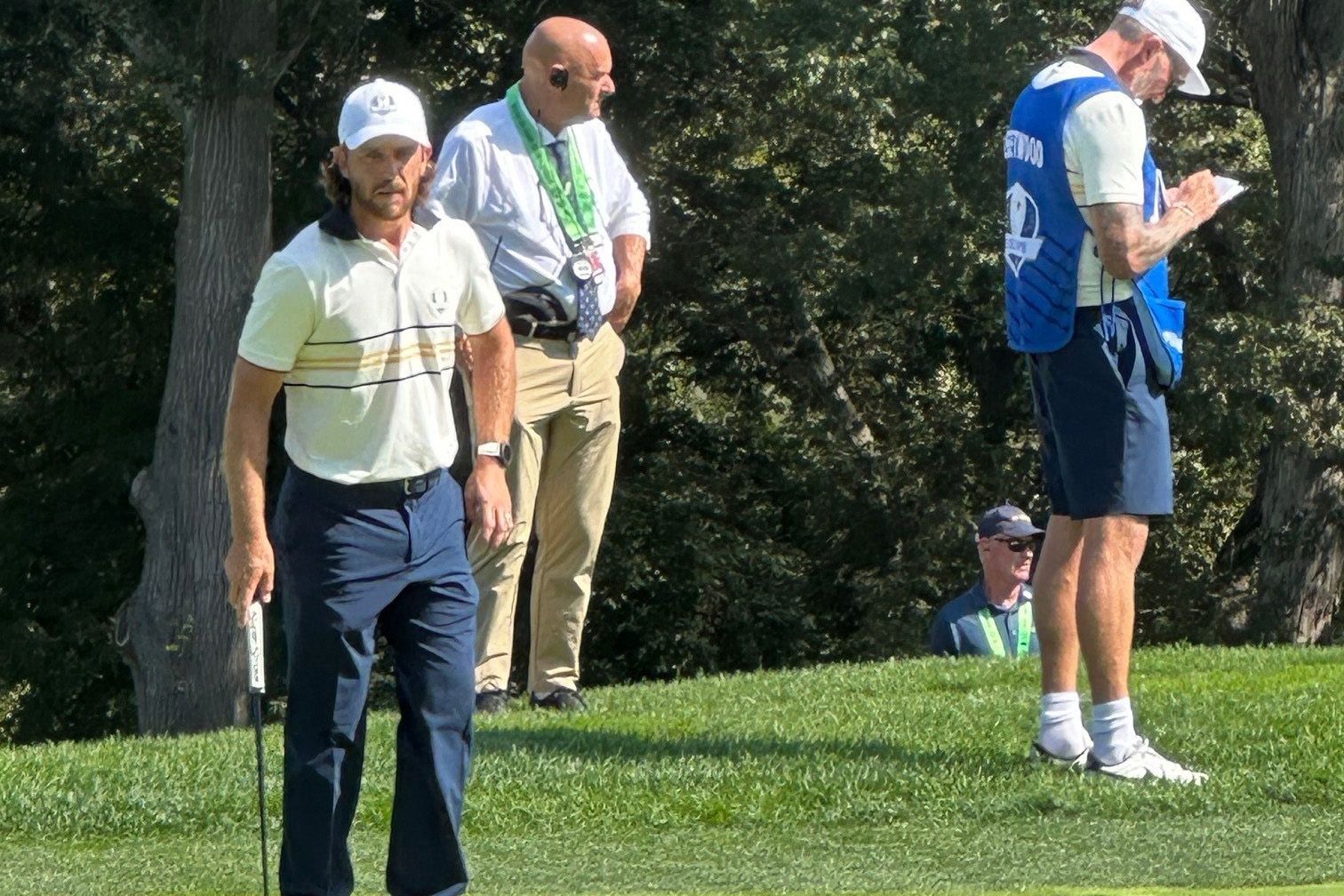
He was part of the officiating team at the recent PGA Championship, at Aronimink in May, and at the Ryder Cup, at Bethpage Black last year.
While attending both was a personal milestone for Watkinson, it’s also evidence of a tournament system at The PGA that’s been built to operate at the highest levels of the game.
“I was a fire officer for the London Fire Brigade, and I’ve always had to know rules and regulations,” he said of his journey into the rules and tournament organisation.
“I’ve always been interested in golf, so I made myself aware of some of the rules – because I could see players at my local club not following them.
“When I was coming towards retirement, I knew a couple of people who were doing this job and I managed to get the position as a Tournament Controller. I was promoted to Director seven or eight years ago.”
Flashback: Ray Watkinson during PGA Playoff duty at Antalya Golf Club, on the PGA Sultan Course, in 2013
Watkinson is one of several of PGA officials given the chance to officiate on the global stage and, for him, the opportunity is inseparable from the PGA structure itself – with those handling everyday tournament decisions the same people who are trusted in the world’s biggest tournaments.
“It’s a fantastic experience and I couldn’t have done it without The PGA, so thank you so much to them for giving me the opportunity to do it and the others I’ve done, including what I do day-to-day,” he said. “I’m 68, so I’m doing it because I want to, not because I’ve got to.”
Nowhere was that seen more than at the Ryder Cup, where – at Bethpage Black in New York – the pressure of the tournament, the sometimes-hostile crowds, and the intensity of match play required clarity and composure.
Watkinson said: “I refereed two of the matches. I was an observer on the Friday, which is to give advanced warning for the referee and help keep crowd in check where the ball might finish.
“You might notify the referee that they could be looking at a ruling, which gives them a bit more thinking time.
“I then refereed the first foursomes on Saturday between Matt Fitzpatrick and Ludvig Åberg and Bryson DeChambeau and Cameron Young.”
"It's a fantastic experience and I couldn't have done it without The PGA, so thank you so much to them for giving me the opportunity." - Ray Watkinson
He had only one ruling to make – showing how a referee’s role can often be marked by moments rather than volume – but the scenario only highlighted the need for expertise.
“The ruling was for Matt Fitzpatrick,” he said. “It was a little tricky one, because the ball was perched right on the edge of a bunker without being in it. It was on a steep face.
“He wanted to know whether it was embedded or not, which it wasn't. But then, he wanted to know what would happen if the ball moved - which depends on whether he caused it to move or not. I explained the ruling to him and he played the shot with no problems.”
While tournaments might focus on individuals – whether that’s the player hitting a shot or the official making a ruling – Watkinson says elite officiating depends on collaboration.
“It’s not just you out there on your own,” he said. “You’ve got a team of referees and you’re part of team and if you can help out another referee then you do, and if another referee can help you out then he or she does. You’ve also go the radio communications and the TV, so you’ve always got back up if you get stuck.”
And for Watkinson, the professionalism required at events like Ryder Cup and PGA Championship is no different to the standards expected throughout The PGA’s own tournaments.
“Players are playing for a prize fund so the decisions we give need to be accurate – because it could cost them positions.
“If you fail to penalise a player, or you penalise a player when you shouldn’t, it can affect the finishing positions of the whole field, which affects who gets prize money and who doesn’t and how much.
“It’s important we know what we’re doing, because there’s a financial cost involved to the players.”
He added: “The clue is in the title, isn’t it? It’s The Professional Golfers’ Association. It’s not just the golfers that are professional. Everyone in the organisation tries to be professional.”