

When it comes to sustainability and golf, we are all in it together. The road to a more environmentally and economically resilient sport requires the collective effort of the whole golfing community.
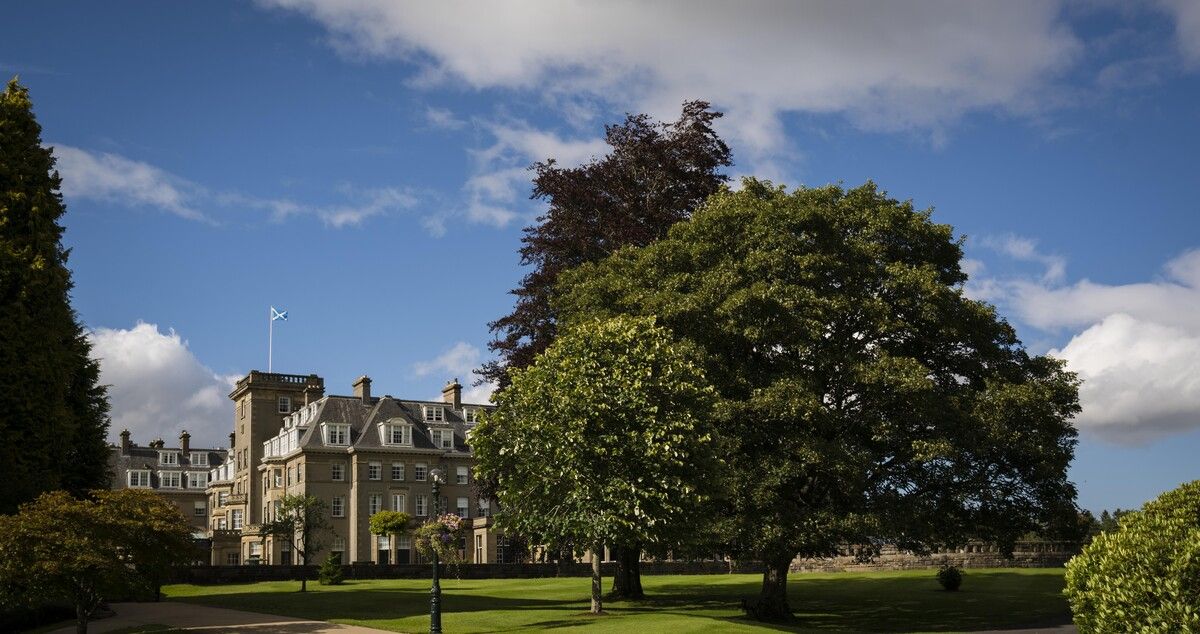
With its headquarters nestled in the grounds of the Gleneagles Hotel, The PGA in Scotland is very much at the heart of a robust green drive that is helping the storied Perthshire resort adapt and innovate in a changing and challenging climate.
At the forefront of this holistic strategy is Mo Mands, the Director of Sustainability at the Gleneagles Hotel.
A qualified accountant, Mands spent three years as Head of Sustainability at the Highland Spring Group, before taking on this pioneering role at Gleneagles in early 2024.
“With a holistic sustainability strategy covering every part of our operations, this role provides many exciting opportunities to work across multiple properties and departments,” said Mands of this wide-ranging position.
“Over the last two years, we’ve set ambitious targets that tackle the twin crisis of climate change and nature loss, established robust baselines to reliably measure our ongoing performance and made progress against our goals through innovation, investment and the collective efforts of our passionately committed teams.
“To support a healthy planet, we’re taking action to minimise our carbon footprint and are committed to reaching ‘Net-Zero’ by 2040. In doing so, we commit to reducing absolute scope 1, 2 and 3 GHG emissions by 90% by 2040, from a 2024 base year.
Our golf courses have been Golf Environmental Organisation certified (‘GEO Certified’® status) since 2014. This accolade recognises exceptional golfing environmental stewardship through protecting biodiversity, using natural resources responsibly and raising awareness for sustainability.”
In an expansive and enlightening interview with The PGA, Mands pinpoints the key areas that are helping the Gleneagles Hotel become a leader in sustainable practices.

Mo Mands, Head of Sustainability at Gleneagles Hotel
Water Management
Water scarcity, especially during the summer months, remains a significant concern locally, nationally and globally. As one of the planets valuable resources, we’re doing everything possible to reduce our water consumption while continuing to maintain high performing playing surfaces.
Our golf courses are watered using on-site reservoirs and dedicated boreholes which naturally harvest rainwater. Regular testing of ground moisture levels coupled with irrigation systems with individually controlled heads, linked to the local weather station means we only water our courses, when necessary, where necessary, whilst considering any forecasted rainfall.
Recognising that data forms a vital part of informed decisions, daily rainfall records spanning decades help us identify changes in weather patterns and consider any mitigations needed to future-proof operations.”
Land Management
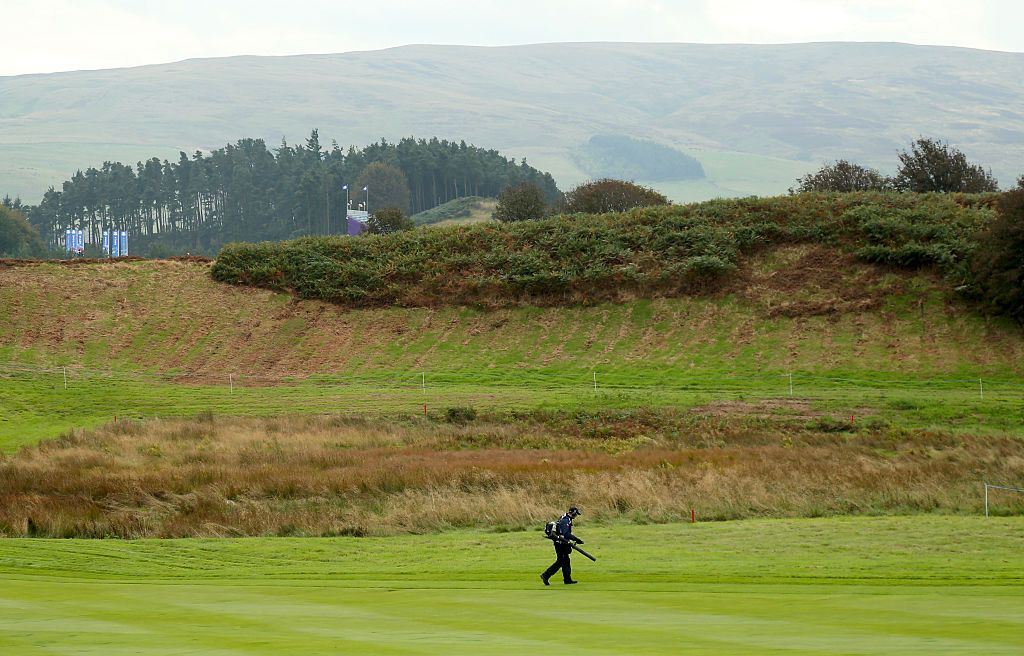
Collectively, our greenkeepers and gardeners have a wealth of knowledge, decades of experience and an enduring passion to uphold the highest standards of land stewardship. Embracing a positive approach to land management across our courses, many areas are left untouched to support biodiversity.
The King’s and Queen’s Courses consist of a mixture of long-established grass species which favour a more traditional, low maintenance greenkeeping approach, requiring less aeration, treatment and watering. They’re also proving to be more resilient to our ever-changing climate, especially during the warm, dry summer months.
Whilst we need to treat our golf courses from time to time, optimal plant and soil health is maintained through regular testing and the use of natural products such as seaweed where possible to support good soil bacteria. Our GPS sprayers apply products with >99% accuracy, helping us to prevent over-application and reduce the overall quantity of products we use by up to 14%.
Our gardeners contribute daily to our efforts in numerous ways. Donating our green waste to local farmers for composting. Companion planting to group mutually beneficial species together improving plant and soil health and providing food and shelter for wildlife. Selecting hardy drought-resistant species, with long roots that draw moisture from deep within the soil, aiding resilience during the warm and dry summer months.
Nature Conservation
Great golfing experiences depend on nature, and it is vital that we acknowledge this link and minimise our impact on the environment. Our 850-acres are home to a diverse range of flora, fauna and wildlife such as red squirrel, bats, long eared owls and otter.
A three-year biodiversity action plan which centres on protecting wildlife, connecting habitats and maximising on-site carbon sequestration is well underway.
In 2024, we partnered with local ecologists to map the habitats and species thriving across our 850-acres. Surveys undertaken across two days in 2024 recorded 123 plants and noted sightings of several birds listed on the red list of Birds of Conservation Concern such as House Sparrow, Skylark and Yellowhammer.
A LiDAR survey, undertaken in March 2026 to calculate the above ground biomass and carbon stored across our 850 acres, revealed we’re custodians of 7,155 tonnes of CO2e.
The 3D survey mapped all vegetation including 13,284 individual trees and 2,159m of hedgerows, providing a detailed baseline of tree heights, species composition and carbon sequestration. To enhance on-site carbon sequestration and provide an all year-round-food source for the wildlife that call Gleneagles home, we planted 2,000 native trees on the PGA Centenary Course during 2025 with the help of many volunteers from the Gleneagles team and aim to plant a further 1,000 trees in late 2026.
Trees planted include: Wild Cherry, Hawthorn and Rowan, providing pollinators with an early source of nectar and birds with a rich source of autumn berries.
Hazel and Scot’s Pine, an essential source of food and shelter for much loved red squirrels.
Oak, which store carbon for decades to come and support hundreds of species of insects and wildlife.
We’ll repeat the LiDAR survey in 5 years to measure the impact of our planting efforts.
To support nature conservation beyond our wingspan, our £1 per night discretionary guest donation scheme raises funds for carefully selected charities making a difference environmentally, socially and culturally. This includes an enduring partnership with Perth & Kinross Countryside Trust which supports wider nature conservation efforts across the region.
In 2024, we launched a two-year community-led initiative focusing on protecting vulnerable hedgehogs. Hedgehogs are an indicator species, letting us know when a habitat is healthy. However, numbers have declined by almost a third in the last decade, indicating worsening environmental health, which in turn is likely to negatively impact other species. Funded by donations from Gleneagles and its guests, volunteers in our local community were equipped with wildlife cameras, tunnels and hibernation boxes for use in private gardens and community spaces to improve connectivity between feeding grounds and reduce the risk of fatalities when crossing roads.”
Energy & Renewables
Energy efficiency and renewables are a key focus for us. All the purchased energy used at Gleneagles comes from 100% renewable sources and we’re actively exploring ways to decarbonise our heating.
We set annual improvement targets with progress monitored monthly through insightful KPIs (Key Performance Indicators). Accountability for energy consumption has been enhanced through installation of sub-metering, enabling us to break consumption down by area. Energy efficient LED lighting has been installed throughout indoor and outdoor areas, with timers and automation helping us to reduce our overall consumption.
When it comes to heating, we’re taking time to fully assess our options to make sure we select the right solution that futureproofs us long-term. Options include switching any remaining oil and gas boilers to electric alternatives, investment in technology such as heat pumps or utilising transitionary biofuels.
We’ve set a target for 80% of company vehicles to be fully electric by 2030. With our current fleet, including all 53 of our golf buggies, golf operational, shuttle and ranger vehicles, we’ve already reached 45%. The challenge remains the agricultural equipment used across our golf courses therefore collaboration with our suppliers will be key to delivering this target.”
Food & Beverage
Nestled in the heart of Scotland, we’re surrounded by a landscape rich in natural treasures. From our trusted neighbours and local producers come the finest seasonal ingredients, allowing us to celebrate Scotland’s larder and bring our local food philosophy to life, plate by plate.
However, food and beverage emissions represent 19% of emissions at The Gleneagles Hotel. To reduce these emissions, we partnered with Klimato to calculate the carbon footprint of dishes on our menus. This information helps our chefs understand the environmental impact of every ingredient and consider simple swaps that minimise our impact while maintaining the exceptional dining experience for which Gleneagles is famed.
All our meat is responsibly sourced from Scottish farms specialising in grass-fed beef and lamb, and over 80% of our seafood is sourced from Scottish Waters. Suppliers are certified to standards that promote responsible behaviours above and below the waters to safeguard the health of future fish stocks.
Committed to reducing food waste by 60% by 2030 from a 2024 baseline, we have invested in Winnow, a dedicated food waste management system which uses scales, camera technology and AI to help us reduce food waste at source. Understanding food waste by ingredient, service and restaurant is helping the teams to improve accuracy when ordering and preparing food. The lessons learned to date are transforming the way our chefs think, during menu design and service itself, all of which are making a positive difference.
Supporting a Circular Economy
We take our role in the circular economy seriously, prioritising a “reduce, reuse, recycle” approach to minimise waste and give valuable materials another life beyond their initial purpose at Gleneagles.
Examples include: Working closely with our suppliers to maximise deliveries in re-usable crates.
Incentivising employees to bring reusable coffee cups, water bottles and food containers.
Recycling retired uniforms which are repurposed into new products based on the material quality.
Donating all used cooking oil to Olleco for conversion to low-carbon biofuel.
Refurbishing 250+ windows over the last year.
A close working relationship with our local waste contractors, coupled with regular training for our teams, and robust recycling procedures, helps us support and encourage responsible waste management. All our waste is either recycled or goes to make energy from waste; nothing goes to landfill.”
People
We believe transparency is vital, not only to communicate where Gleneagles is on its journey, but to promote industry leadership, best practice and meaningful change.
Sustainability has been authentically woven throughout our guest and people journey, bringing our efforts and commitments to life in a truly immersive and engaging way.
Dining experiences centre around our local and seasonal food philosophy, showcasing exemplar farmers, producers and growers; we’re unapologetically educating the next generation about the importance of nature conservation through our Little Glen Adventurers Programme; our bespoke event footprinting service helps groups measure and minimise the impact of events held at Gleneagles; and nature boards positioned across our golf courses provide information to guests and members, communicating just how special our surroundings are.
Sustainability remains central to our employee journey with an abundance of opportunities to learn, experience and contribute through training, volunteering and a range of committees.
A view from The PGA in Scotland by regional manager, David Longmuir
Although it may seem a daunting task to begin the sustainability journey at your golf club, taking small steps can have a positive impact and lead to positive changes. It is becoming increasingly important to consider the impacts of climate change on the golf course and to future proof your facility to ensure golf continues to thrive in future years.
As a golfing community, from The PGA Professionals, Green Staff, Club Managers, Catering Teams, and all Club Volunteers, it is our duty to work together to ensure the future of the game in Scotland and around the world. I hope the story from Gleneagles can inspire and illustrate to your Golf Club ways in which it can begin or continue your sustainability journey.
There are many resources available to help you in this journey through various governing bodies within the golf industry, including Scottish Golf, The R&A and BIGGA. We will continue to share examples of good practice and help guide Golf Clubs to success in this area.