
At 21, Daniel Moos already carries a distinction few in the profession can claim: he is the youngest current PGA Member in the United Kingdom. His route into golf was not mapped out from childhood with a single-minded plan.
Instead, like many young players, it grew from a love of the game, sharpened during lockdown, and developed through the influence of mentors who opened his eyes to the breadth of a PGA career. Now working at Loretto Golf Academy, Moos is building his reputation in coaching, with a particular passion for junior development and long-term player growth.
For PGA Members, his story is both familiar and refreshing: a reminder of the value of opportunity, the power of qualification, and the credibility those three letters continue to carry across the game.
Here, he reflects on choosing the profession, learning from others and shaping the golfers of the future.
How lockdown turned golf from a hobby into a career
Covid was really the turning point. I used to play other sports competitively and golf was kind of a hobby. During Covid, I was still holding a pretty good handicap in single figuresbut I didn't take it too seriously.
There was obviously not much else to do because of the lockdowns and golf was a way for me to put my energy into something rather than just doing nothing. And that's when I realised, if I enjoy this as a hobby and it's something that I never fall out of love with, then it's probably something I should try doing for the rest of my life.
I grew up playing at Longniddry in East Lothian and I had the chance to play all the courses down the Golf Coast throughout my junior career. So basically I had the pick of 21 courses in a seven-mile stretch with a mix of every type of course.
Choosing the PGA route over college golf
When I turned professional, I was off +1 and I looked at going to the US for college but it wasn't something I was overly keen on. I was quite academic at school so college and golf at that point wasn't necessarily something I was thinking of, and I then fell into the PGA role.
In hindsight, I'm glad because I think even if I had gone down the college golf route, yes, I would have gained competitive experience, but I think I would have still ended up in the same role that I am in now. I've just kind of skipped out three years of college.
The mentors who shaped his early career
I have three main ones. I'd have Colin Fairweather, who's the PGA Professional at Longniddry, and he basically started off my career. He was looking for an assistant and I was sceptical at this point whether turning pro was something that I definitely wanted to do, but I thought, let's give it a shot.
So I applied for the job, he gave me the opportunity, and I then stayed with him for just under three years. He basically got me involved in every area that I now use now; club repairs, fitting, coaching, everything and he gave me that knowledge to then take it further and develop it.
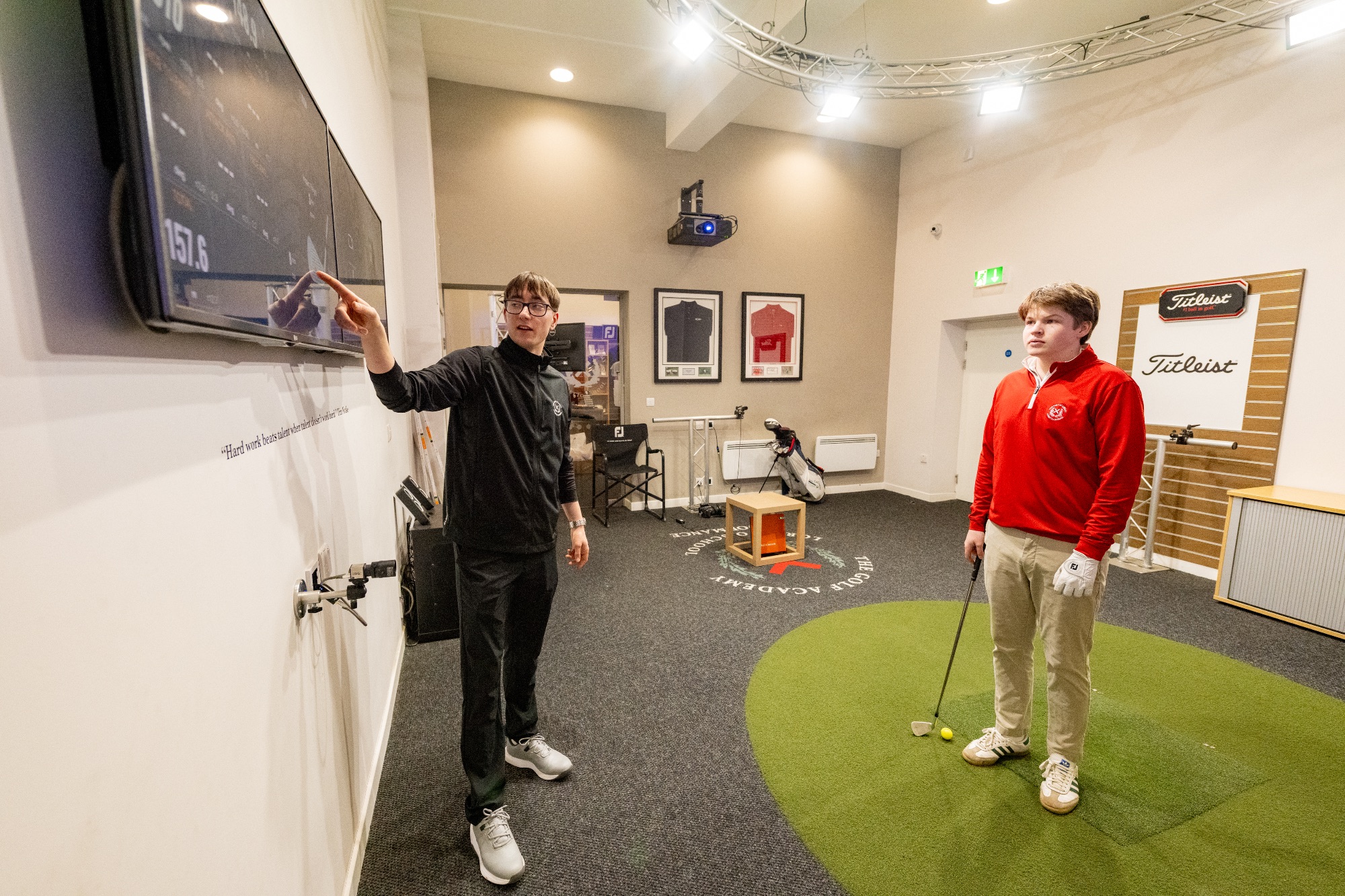
My second one would be Nick Drane, who's my boss now at Loretto Golf Academy. He's a PGA Professional as well and he has given me the opportunity to develop my coaching skills.
A lot of what I do now is predominantly junior coaching, whether that's from a beginner and we now work right the way through to the kind of top national junior golfers from all over the world. Because we're in a boarding school, we have international pupils and we work with WAGR-ranked players all the way to beginner athletes.
The third one is Alan Martin who works for The PGA as the coach education manager in Scotland. He was my wisdom within The PGA throughout my training and he made sure that I was always going in the right direction.
We still chat today and he's still there if I ever need any advice.
Why the PGA qualification carries global credibility
Previously, I was quite alien to what The PGA meant. I knew every golf club had a PGA Professional but now it's a way of recognising the top professionals in the industry, to show the training they've had, the amount of knowledge they've got and their experience.
It adds a vast amount of credibility and by putting those three letters before your name sets you well above the industry standards and especially if you go globally.
So, for example, I work with pupils from all over the world, and everyone knows what those three letters mean. So it adds credibility, and that gives them that trust in that what you're going to deliver is going to be world class.
Building a future around junior coaching and player development
Coaching has definitely become my passion. In my current role we basically take golfers from the age of four all the way to age 18. So long-term athlete development is definitely something that I'm passionate about and making sure that yes, we can grow their technical skills within the game, but also to make sure that we can get more people playing golf and that they're all getting the enjoyment out of it that I did and the reason that I chose to take it as a job.
How coaching has moved beyond one-size-fits-all technique
I started doing golf lessons when I was probably about nine or 10. I would play in the local county fun schools' competitions at about 11 or 12 and I played other sports, which took up a lot of my time. I played to a decent standard as a junior and I probably received hundreds of lessons towards the end of my junior career.
Everything's become a lot more holistic, which is a good thing and there's no one model. When I was a junior, it was definitely spoken about that everyone wanted you to swing it in one certain way, whereas now it's kind of what's right for that player.
It might not be the most technically correct way of doing things but there are things like physical limitations and habits, that coaches nowadays will look a lot more in depth at so that they can work out what's best for the player in front of them – and not what's going to fit the technical form.
Using social media to build trust before the first lesson
In my previous role, I used it to promote like lesson packages and also to let clients know me before they saw me. These days, as much as I would much rather speak to someone face to face, people are going to Google you and they are going to look you up before they come to you for a lesson.
So making sure that your online presence is in a positive manner and also brings across the best side of you professionally, you can definitely use it to your advantage. If people come in the door and they've seen you giving lessons, that already adds a layer of credibility before they've come through the door.