


David Colclough, Head of Coaching and Sport Science at The PGA, explains the contents and thinking behind our current coaching qualifications as we seek to equip the next generation of PGA Coaches.
To read part one of the evolution of the coaching qualification, click here.
The 4C’s framework (Competence, Confidence, Character, and Connection) was initially introduced to the Activities Coach qualification in 2023, but its origins lie much further back in youth sports development [1,2], where it was created to support participants' broader personal growth through sport. Over time, its value has been recognised far beyond junior settings, with organisations such as UK Coaching applying similar principles across all ages and stages of participation.
For PGA Professionals, the introduction of the 4Cs marks an important shift. It reinforces a move away from purely technical coaching towards a more holistic, person-centred approach, with the aim not only of improving performance but also of positively shaping the individual.
It challenges us to ask a more fundamental question - Are we coaching golf to a person, or are we coaching a person to play golf?
Moving Beyond Technique
Coaching in general is characterised traditionally as being focused on competence—helping players strike the ball more effectively and perform better on the course. While this remains essential, a narrow focus on skill alone can limit both the player's experience and long-term engagement.
A more complete approach considers how coaching can also:
- Build confidence, allowing players to trust their abilities
- Develop character, helping them deal with challenge and adversity
- Create connection, ensuring they feel part of the game and its community
When these elements are developed alongside technical skill, coaching becomes more meaningful and more impactful.
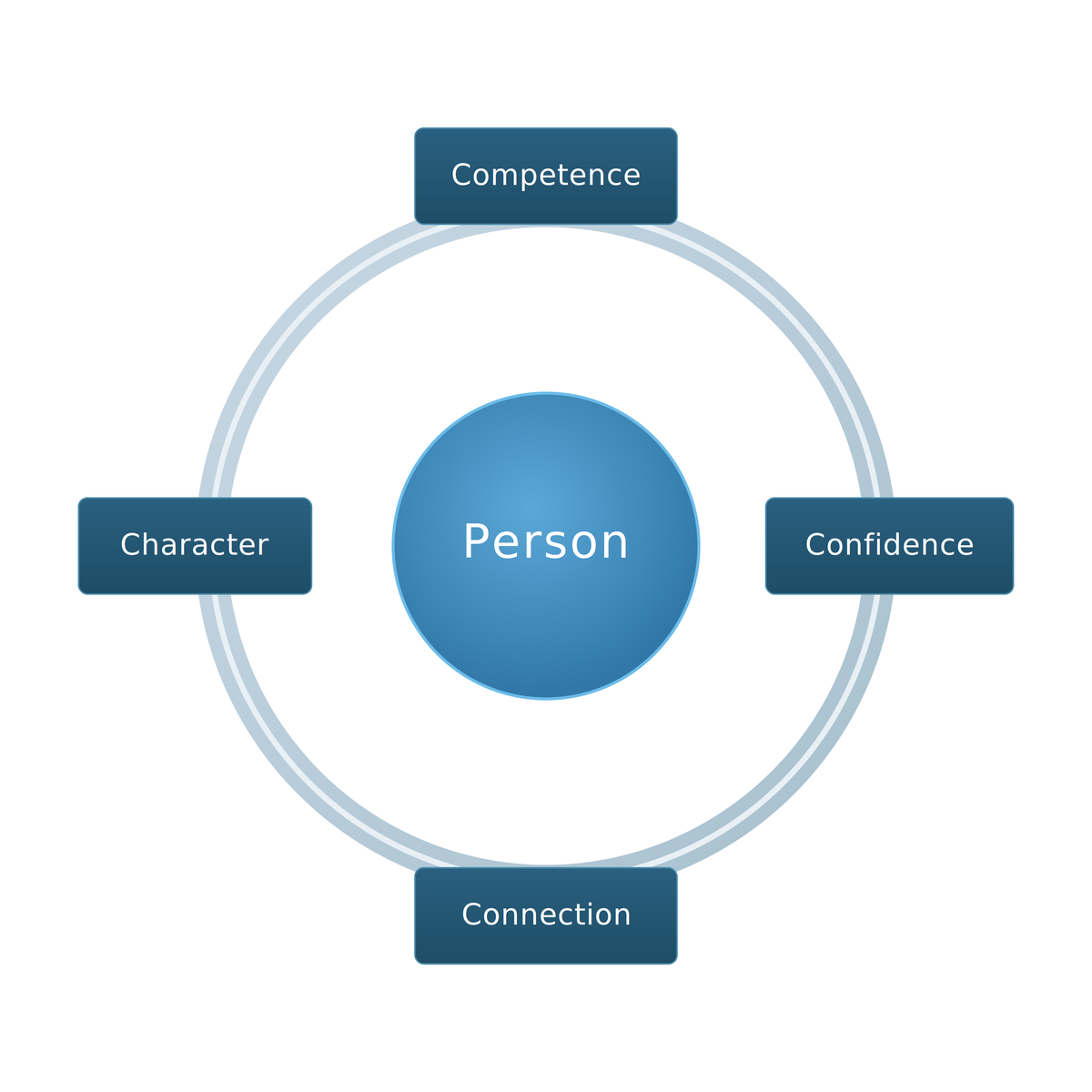
Understanding the 4C’s in Practice
Competence: Building Skill and Capability
Competence remains a cornerstone of coaching. Without a degree of skill, players are unlikely to enjoy the game or sustain participation.
In practice, this might involve:
- Designing progressive practice tasks, such as starting with short chip shots before moving to more complex short game scenarios
- Setting clear, achievable challenges, like hitting several shots into a defined target area
- Introducing varied practice, encouraging players to adapt to different lies, distances, and situations
On the course, competence can be developed through structured challenges that require decision making, such as planning how to play a hole within certain constraints.
The key is to ensure that learning is appropriate, progressive, and enjoyable, enabling players to see and feel improvement.
Confidence: Developing Self-Belief
Confidence is what allows players to take their skills from the practice ground onto the golf course. It influences decision-making, commitment, and overall enjoyment.
Coaches can develop confidence by:
- Creating early success opportunities, such as using larger targets or shorter distances, before increasing difficulty
- Designing challenges where success is likely but not guaranteed, helping players build belief through achievement
- Providing positive, specific feedback that recognises improvement and effort
Simple coaching behaviours also play a role. Asking questions like “What did you do well there?” encourages players to reflect on their successes and take ownership of their progress.
Introducing light competitive elements, such as putting challenges or nearest the pin games, can also help players build confidence in slightly pressured situations.

Character: Shaping Behaviour and Resilience
Golf naturally exposes players to challenge, making it a powerful vehicle for developing character. Missed shots, difficult conditions, and pressure situations all test how individuals respond.
Coaches can use these moments to develop character by:
- Setting tasks where failure is part of the learning process, and supporting players in how they respond
- Encouraging reflection through questions like “What did you learn from that?” or “What will you do differently next time?”
- Reinforcing positive behaviours such as persistence, honesty, and respect
Scenario based challenges are particularly effective. For example, asking a player to imagine standing on the first tee in front of others, or responding to a poor hole, helps prepare them for real on-course experiences.
In this way, coaching becomes not just about improving performance, but about shaping how players think, behave, and respond.
Connection: Building Relationships and Belonging
Connection is often the most overlooked aspect of coaching, yet it plays a critical role in long-term engagement. Players who feel connected to their coach, to others, and to the club environment are far more likely to continue participating.
In practice, connection can be developed through:
- Group based activities, such as paired challenges or team games, encouraging collaboration and interaction
- Creating opportunities for players to socialise and play together, helping them feel part of a community
- Building strong coach–player relationships by showing genuine interest in the individual, their goals, and their experiences
Simple actions, such as introducing players to others in the group or acknowledging progress collectively, can significantly enhance a player’s sense of belonging.

The Multifaceted Nature of a Coaching Session
While each of the 4C’s can be developed individually, the most effective sessions are those that integrate them seamlessly. A well-designed coaching experience will often address all four areas simultaneously.
Consider a short game session that transitions onto the course:
- Players begin with pitching practice, working on technique and distance control to develop Competence
- The session is structured to allow early success before increasing challenge, helping build Confidence
- A competitive up and down challenge is introduced, requiring players to respond to pressure and setbacks, building Character
- Players work in pairs, supporting and scoring each other, creating interaction and shared experience, all designed to grow the Connection
By the end of the session, players have not only improved their skill level but have also grown in confidence, experienced challenge, and strengthened their connection to others.
This is where the 4C’s framework becomes most powerful, not as four separate elements, but as an integrated approach to coaching.
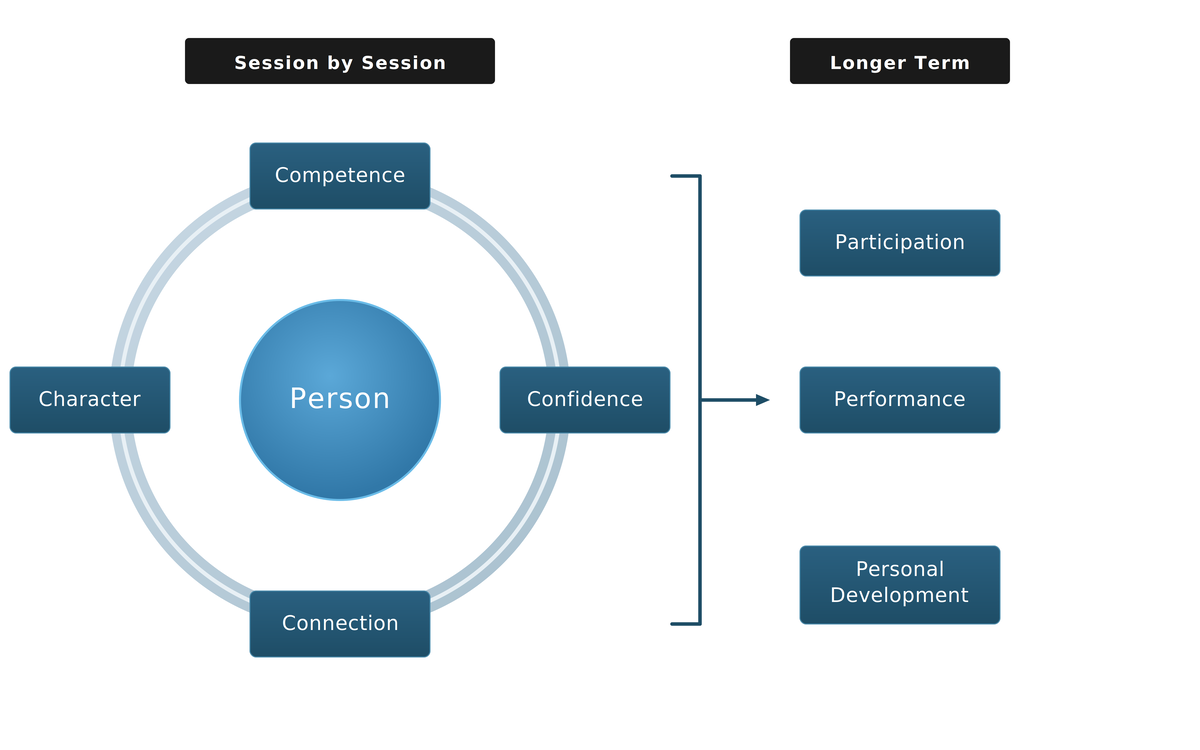
Long Term Impact
While the immediate focus of coaching may be on session delivery, the long-term benefits of the 4C’s framework are significant.
When competence, confidence, character, and connection are consistently developed, players are more likely to improve their performance while remaining engaged in the game over time. These qualities help sustain motivation, enjoyment, and long-term participation.
They also support broader personal growth, enabling players to develop life skills such as resilience, self-awareness, and social connection [3].
A Challenge for PGA Professionals
The introduction of the 4Cs into PGA coaching is not about replacing technical expertise; it is about enhancing it by encouraging coaches to broaden their thinking and consider the player’s full experience.
As you reflect on your own practice, consider:
- How deliberately are you developing confidence, not just competence?
- Where are the opportunities for players to build character through challenge?
- What are you doing to strengthen their connection to the game and its environment?
Conclusion
The 4C’s framework offers a practical and powerful way to deliver coaching that truly develops the whole person. While its origins lie in youth development, its relevance extends across all levels of golf.
By embedding competence, confidence, character, and connection into every session, PGA Professionals can create richer experiences, stronger relationships, and more meaningful outcomes for the players they coach.
Ultimately, great coaching is not just about helping players perform better; it is about helping them become better through the game.
References
1. Lerner, R.M., Fisher, C.B. and Weinberg, R.A. (2000) ‘Toward a science for and of the people: Promoting civil society through the application of developmental science’, Child Development, 71(1), pp. 11–20.
2. Côté, J. and Gilbert, W. (2009) ‘An integrative definition of coaching effectiveness and expertise’, International Journal of Sports Science & Coaching, 4(3), pp. 307–323.
3. Côté, J., Turnnidge, J. and Evans, M.B. (2014) ‘The dynamic process of development through sport’, Kinesiologia Slovenica, 20(3), pp. 14–26.
To read part one of the evolution of the coaching qualification, click here.