

David Colclough, Head of Coaching and Sport Science, explains the contents and thinking behind the current coaching qualifications as we seek to equip the next generation of PGA Professionals.
If you qualified as a PGA Professional before 2023, your coaching education would have looked quite different from what Trainees are now being taught and assessed against. And if you’re a Training Professional supporting Trainees today, the frameworks, language and expectations they are working with may be newer than you think.
That change is worth addressing. Not because the old approach was wrong, but because coach education has evolved considerably and that matters for anyone involved in developing the next generation of PGA Professionals.
This is the first in a series of articles exploring the current coaching qualifications in detail: the frameworks that underpin them, how they connect to each other and how they feed into academic pathways such as the Foundation Degree in Professional Golf awarded through the University of Birmingham and the Diploma of Higher Education, delivered in partnership with the University of the Highlands and Islands
From Assistant Coach to Autonomous Practitioner
When coaching qualifications were first delivered to volunteers in 2005, the role definitions were straightforward but limited. Level One described an Assistant Coach, someone only able to work with a more qualified coach or professional. Level Two defined a Coach as someone who could independently plan, deliver, monitor and evaluate a linked series of sessions.
Those definitions served their purpose at the time. But as times have changed the qualification has been substantially redesigned.
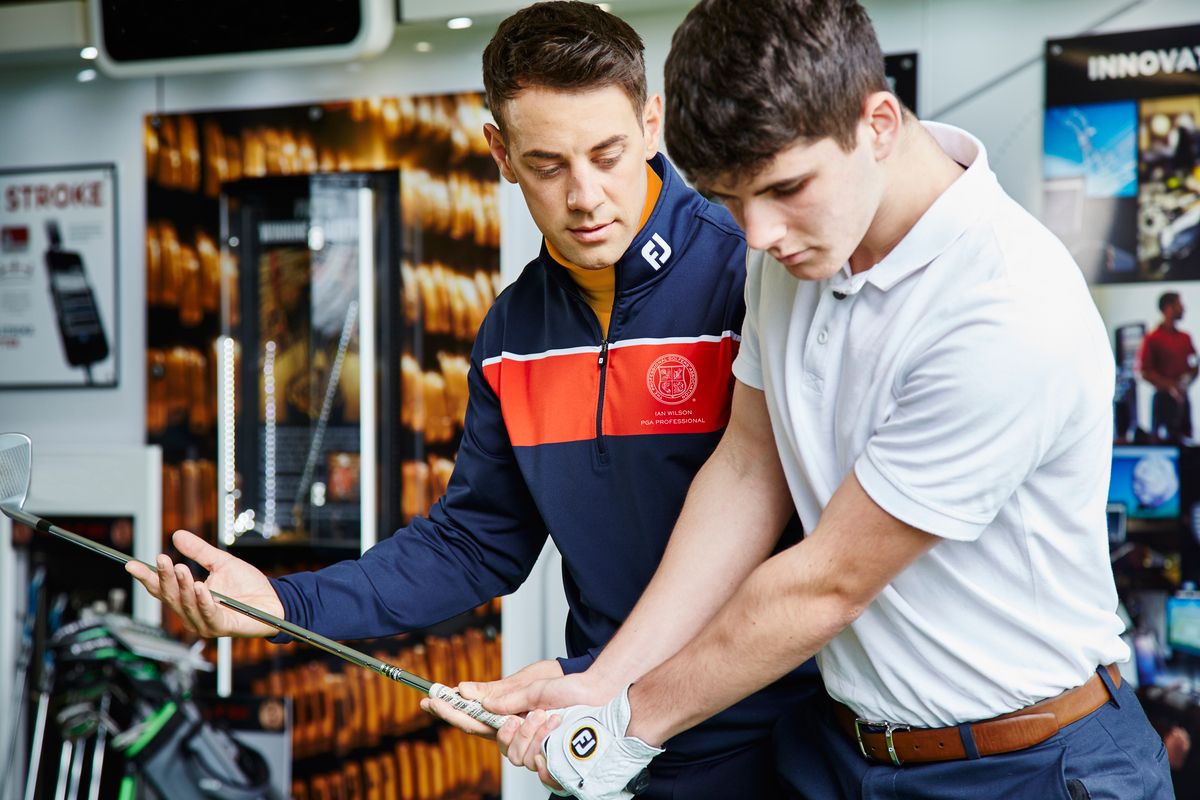
In 2023, The PGA introduced the Activities Coach qualification, replacing what was previously known as Level One. The Activities Coach is defined as an autonomous role, designed for individuals who can deliver predetermined coaching activities and sessions of limited scope, primarily targeted at people new to the game. The focus is on creating positive first experiences of golf, introducing core skills and helping participants feel more confident engaging with the game.
For Training Professionals, this is a meaningful shift. Trainees working through this qualification are not simply assisting. They are expected to plan, deliver and reflect on their delivery of activities within sessions whilst working in cooperation with their Training Professional. That relationship is built into the structure of the qualification, and Trainees will be looking to their Training Professional for guidance and context as they begin putting theory into practice.
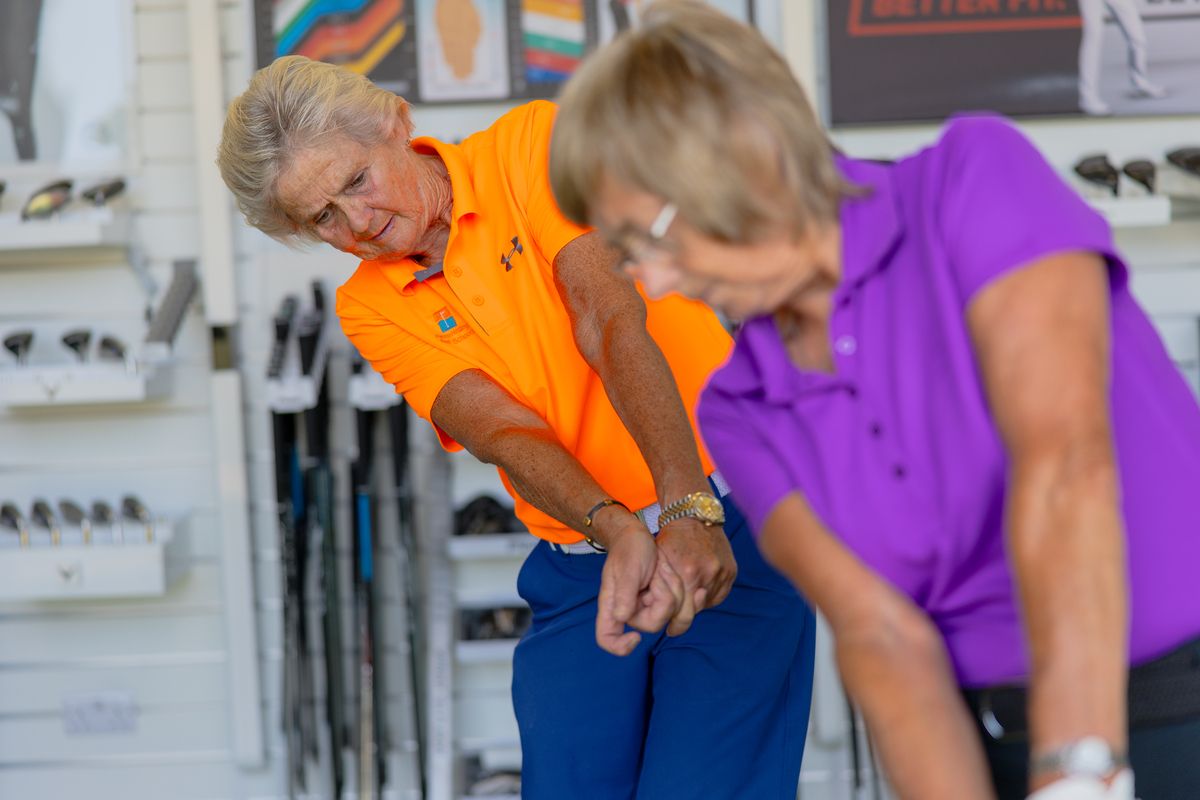
The learning programme: Six core modules
The Activities Coach qualification is underpinned by six carefully structured modules:
- Roles and Responsibilities of the Activities Coach
Developing professional standards and exploring coaching philosophy - Creating and Maintaining Safe Environments
Ensuring sessions are safe, inclusive, and appropriate for the setting. - Understanding Your Participants
Introducing participant centred coaching and recognising individual needs. - Facilitating Learning
Exploring how people learn, communication strategies, and inclusive delivery. - Coaching Process Fundamentals
Planning, preparing, delivering, and reviewing coaching sessions—skills that remain central throughout a coaching career. - Golf Knowledge - What to Coach (Skills and techniques)
Trainees are encouraged to begin delivering activities within sessions as early as possible in the qualification, building experience across a range of environments. Activities Coaches may work in community, school or club settings, though the qualification notes that care must be taken when preparing novice coaches for non]-golf-specific spaces.
Coaching the whole person
A holistic approach underpins the entire qualification and is the foundation of future direction of Trainees as they move towards the Sessional Coach qualification.
Within the ’Understanding Your Participant’ module, coaches are introduced to the 4C’s framework, which helps them consider how they can support participants in developing competence in learning to play, building confidence and character which will help them play golf and build their own connection with them.
Within the ‘Facilitating Learning’ module, the PAARSS Delivery Principles are introduced – a framework from which a coach can personalise every session to meet the needs of the player. Trainees are challenged to consider whether each session is Purposeful, Appropriate, Active, Representative, Supportive and Safe.
These principles will be explored in more depth in upcoming articles, and Training Professionals will find them a useful lens for reviewing their own session planning and for the conversations they have with Trainees.
A Modern view of technique
The technical module is grounded in a framework of Laws, Principles, and Preferences, originally developed by Gary Wiren and adapted over time.
The framework promotes the notion that technique, and individual elements of technique, are subservient to the skill of flighting the golf ball the appropriate distance, direction, trajectory, and curvature for the shot being played. As such, it prioritises a strong understanding of the impact conditions that create ball flight, with technique viewed as the player’s chosen solution to achieve those outcomes.
Rather than forcing players to conform to a single swing model in the hope that it will consistently produce the desired ball flight, the emphasis is placed on observing results at impact and reflecting back on the technique used by the player to create those conditions.
Basic technical models are shared to support novice coaches, but the emphasis remains firmly on encouraging Trainees to begin recognising individual traits and adapting their coaching accordingly.
Coaches also learn introductory games and activities suitable for beginner golfers, alongside consideration of physical, mental, and equipment related factors.
From Level Two to Sessional Coach: coaching with purpose
The evolution of the former Level Two qualification has been equally significant. What was once defined as “a coach able to deliver multiple sessions to established golfers” has now been reshaped into a role that reflects contemporary coaching practice, and the realities of how many golfers engage with the game today – Sessional Coach.
A Sessional Coach is defined as someone who delivers focused sessions, built around clear session objectives, using effective coaching behaviours and purposeful activities to support participant development and engagement – whilst ensuring sessions are enjoyable, representative of the game itself and that that participants feel safe, motivated and empowered within the learning process. This is a deliberate move away from viewing coaching as simply “delivering content” and toward recognising coaching as structured, reflective and participant driven.
Where the Activities Coach focuses primarily on introducing people to the game, the Sessional Coach works with both new and established golfers across all ages and abilities, supporting recreational participation and improved performance.
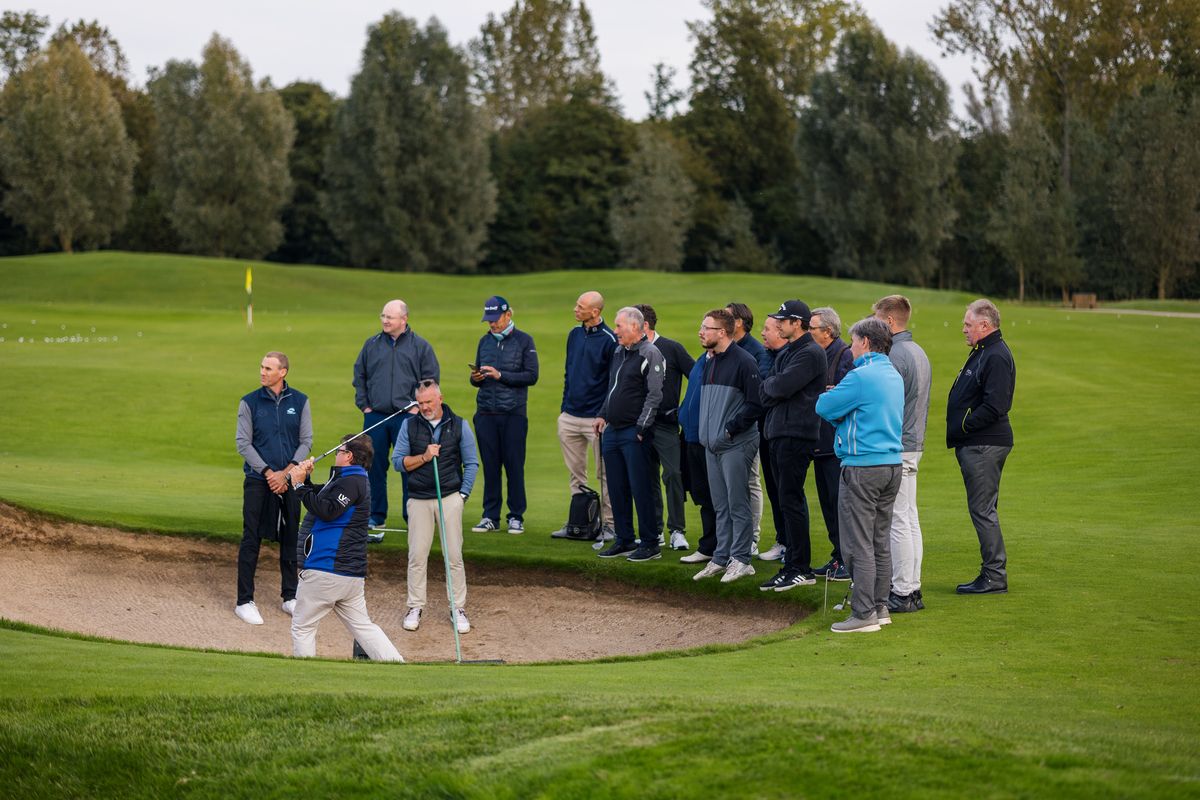
Creating meaningful learning environments
The qualification builds directly on the foundations introduced within the Activities Coach pathway and begins to place greater emphasis on longer term progress in participation, performance and personal development (the 3P’s of the Personal Assets framework).
The PAARSS Delivery Principles are revisited and refined to suit the coaching of individual and established golfers. Used alongside the 4C’s and 3P’s frameworks.
Six modules, one coherent philosophy
The Sessional Coach qualification is delivered through six modules, five of which mirror the structure of the Activities Coach Programme:
- Roles and Responsibilities of the Sessional Coach
- Creating and Maintaining Safe Golfing Environments
- Understanding Your Participant
- Technical, Tactical, Physical, Mental, and Equipment Aspects of Golf
- Developing an Agile Coaching Process and Practice
The key differences come in the Activities Coach’s ‘Facilitating Learning’ module, which becomes ‘Analysing and Improving Player Performance’. This reflects the greater complexity of coaching established golfers and the need to observe, interpret and intervene effectively within individual contexts.
The Framework for Coaching Practice
At the outset of this qualification, Trainees are introduced to the Framework for Coaching Practice, designed to provide a clear overview of the fundamentals of the coaching experience. Central to this framework is the explicit link between session objectives, session activities, coaching behaviours and player engagement.
These four elements are deeply connected and progress, or their lack of, within one area influences others. As will be explored in future articles, imbalance between these components often limits a coach’s ability to develop any one of the 4C’s effectively. The thoughtful application of the PAARSS Delivery Principles helps coaches refine both session design and their own behaviours, ensuring alignment between intention and outcome.
A deeper understanding of performance
The Sessional Coach qualification continues to build on ball flight and impact factors, and how these are shaped by movement patterns and swing principles. A key emphasis is that golfers operate within a range of functional technical solutions, not just one.
Players have options and some combinations of movement and swing characteristics work more effectively together than others. Trainees develop a clear, repeatable process for making technical interventions rather than defaulting to a single model, habit or bias.
The same approach is applied to the short game and to shots from uneven lies, ensuring coaching remains representative of actual play rather than solely range based practice.
Beyond technique, the qualification also addresses how equipment influences distance, direction, trajectory, curvature, and feel, and when these considerations may support or hinder progress.
Mental skills are introduced with a focus on building awareness of how mindset and emotion interact with physical and technical performance. Physical considerations, including range of motion and movement capability, are explored alongside the practical use of technology such as launch monitors and video analysis.
The programme even begins to consider the emerging role of artificial intelligence, encouraging coaches to think critically about how AI may enhance analysis, feedback, and session design – without replacing the central human relationship.
Coaching for the Modern Game
Taken together, the two coaching qualifications are grounded in well-established examples of effective coaching from across the profession. These examples are supported by relevant research from sports and golf coaching and aligned with nationally recognised sector‑based coaching standards. Together this creates a coherent and credible framework for coach education and development.
This integrated approach supports PGA Trainees in developing the knowledge, skills, and reflective capability required to progress their practice and begin their journey towards becoming more effective golf coaches.
In the next articles, we will explore these frameworks and principles in greater depth and examine how they inform the education of PGA Trainees preparing for long term careers within the profession.