


This week marks the launch of WGD Week 2026 (May 26 – June 2), as Women's Golf Day brings together clubs, instructors, and communities across six continents to engage new and existing female golfers.
It's a timely reminder of the significant opportunity that exists at club level and to help PGA Members make the most of it, England Golf's Head of Women's Development, Emma Highwood, shares key insights from her recent Club Growth Workshops on how to better attract and retain women under 50.
These Workshops underlined the scale of the opportunity that exists for clubs prepared to build more flexible, welcoming pathways for women.
Across England, more women are showing interest in golf through driving ranges, simulators and off-course formats, but that interest is not yet reflected strongly enough in club membership.
Women under 50 currently account for around 2% of club members, a figure Emma Highwood describes as confronting, but also one that points towards a significant opportunity for clubs willing to look carefully at their offer.
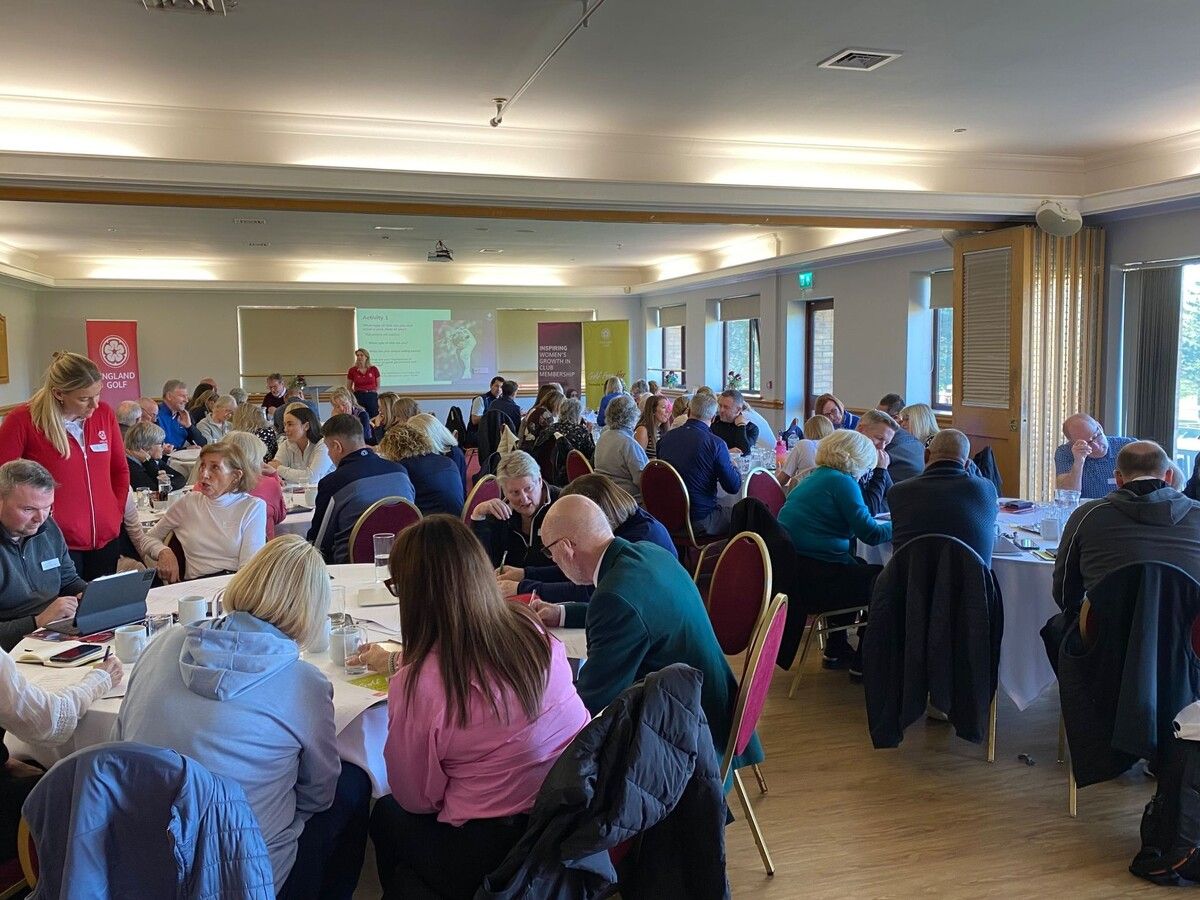
As England Golf's Head of Women's Development, Highwood delivered eight Women's Club Growth Workshops in March – an increase on the five initially planned after demand soared, with more than 500 participants and 300 clubs represented.
"We were oversubscribed with the workshops, which says there is a willingness and a drive to move forward in this space," she said. "I definitely feel inspired by that. Every single workshop had green shoots of people coming up with innovative ways to reach this particular group."
While the workshops reflected that appetite, their main value was in helping clubs understand where their current offer may be misaligned with the lives and expectations of younger women. The sessions began with insight into women's experiences of golf, the barriers they face and the conditions that make them more likely to feel welcome, before asking clubs to consider the strategy, culture and buy-in needed to support change.
Highwood says one important finding was that women under 50 cannot be treated as a single audience with one set of needs. Clubs were encouraged to think about who they are trying to reach, what stage those women are at, and whether the current pathway gives them a realistic next step after an introduction to golf.
"What we find is that the next step is membership and 18 holes, and there is a massive gap in what is being offered at the moment," she said. "We are saying to clubs, do the taster event, but think about what comes next. Full membership is not the next step for everyone, so what are you going to offer to help those women keep playing and learning?"
That gap between first engagement and regular participation matters for PGA Members and managers because many women are interested in learning the game, but are not immediately motivated by traditional markers such as handicaps, competitions or 18-hole play. Research shared through the workshops identified time pressure, accessibility and value for money as the strongest barriers.
Pictured: Emma Highwood
"If people are time poor, what can we offer them within the time they have?" said Highwood.
"Sometimes a lot of what is being offered might be during the day, but if women are working, they are not going to be able to access that opportunity. We need to think about timing and make sure what we are offering is accessible."
When time, cost and confidence are viewed together, the challenge for clubs becomes more specific than simply offering more activity for women. A woman who can only visit once a week, or who has one or two hours available, may not see value in a seven-day membership or a pathway built around 18 holes. Someone learning for the first time may need a safe space to develop at her own pace.
"If women are saying they do not have much time, they want value for money, they are not necessarily motivated by competition straight away, and they want a safe space to learn at their pace, you can see where the disconnect happens if the offer is only 18 holes, handicap and competition," Highwood explained.
Because of that, shorter formats are becoming an important part of England Golf's work with clubs.
"If we want to reach this audience and they are time poor, we do need to think differently about short formats," she said. "That could be three holes or six holes. If someone has two hours or one hour, what can we do in that time to engage them at club level?"
The workshops also placed strong emphasis on the internal foundations needed before recruitment activity begins. Highwood says clubs often want to move quickly to a campaign or programme, but facilities need to understand why women's growth matters and what adaptations may be required if new participants are to stay.
"Some clubs jump straight to the recruitment initiative, but from our experience you have to get some things in place internally first," she said. "You could run a really great Get into Golf programme, but if you have not got buy-in within the club around what happens next, there may be decisions needed around adaptations to retain those women."
That means women's growth has to be connected to the club's broader direction, rather than placed solely with the women's section or volunteers. Highwood was encouraged that around 30% of attendees were men, with managers among those taking part.
"Sometimes this has been seen as a women's problem or a women's opportunity," she said. "We want to bring it into the heart of golf clubs and make it an opportunity for the golf club itself. We need to work collectively as an industry to grow this space."
England Golf will continue the work through the Women in Golf Charter, club and county support, growth pilots and bite-size education in the months ahead.
Although every club will need to shape its response around its own facility, membership profile and local audience, the learning from the workshops points in a clear direction. Women and girls are showing interest in the game, but clubs need pathways that fit their available time, support their confidence, and give them reasons to keep returning.