
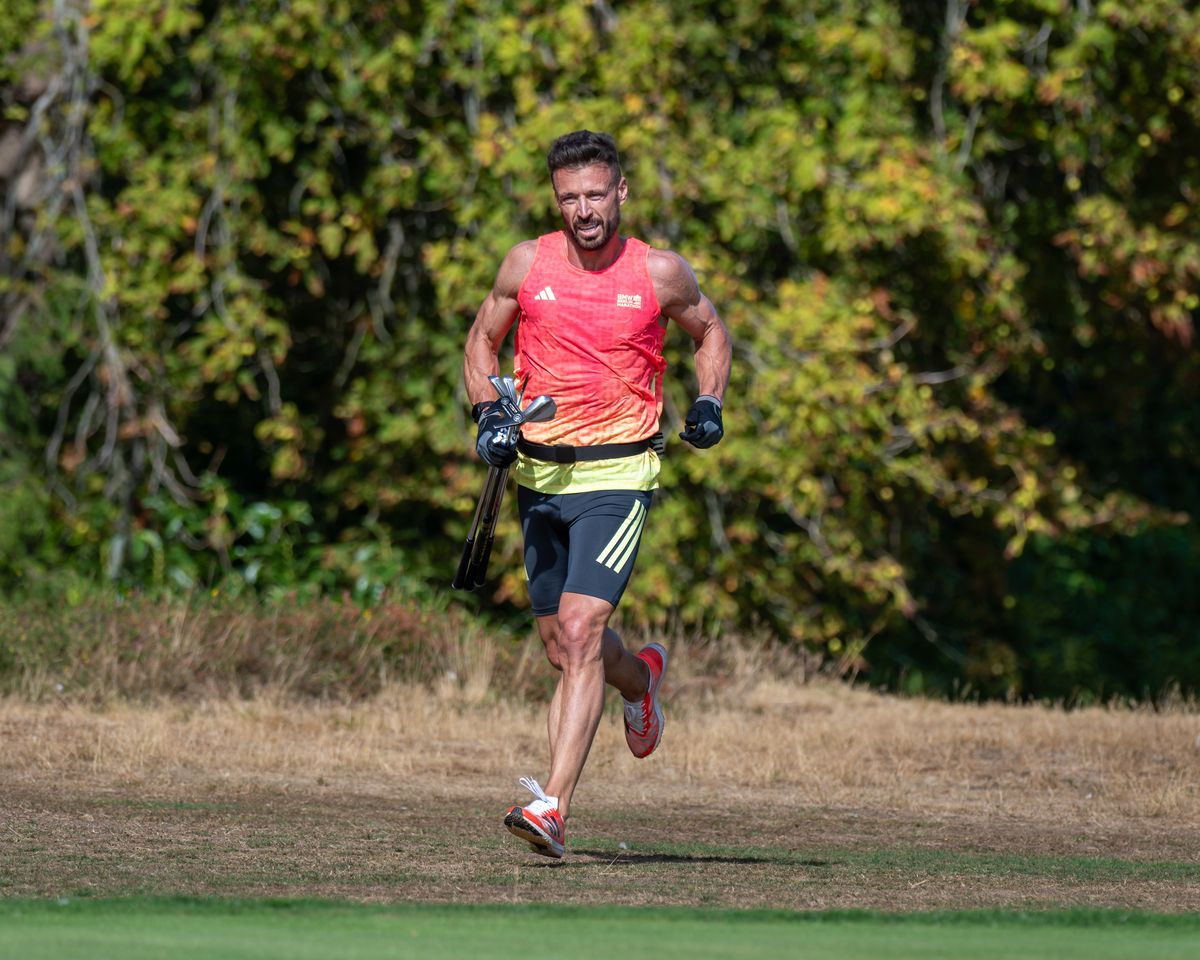
As The PGA mark our 125th anniversary, Master Professional Denise Hastings reflects on a coaching journey shaped by instinct, experience and ever-advancing technology – and explains why the person in front of her still matters more than the numbers on the screen.
When Denise Hastings began teaching, a golf lesson could involve a VHS camera, a spare battery, a change of angle and a good deal of trust. The pupil might not see the footage until after the session; the coach had to rely on trained eyes, ball flight, contact, alignment and the kind of instinct built from years of playing and watching.
Nearly four decades later, the landscape looks very different.
High-speed cameras, large monitors, TrackMan, FlightScope and instant slow-motion playback have transformed what coaches can measure, show and explain in real time.
For Denise, who was awarded PGA Master Professional status in 2025 and became only the fourth woman to receive the designation – after Beverly Lewis, Kitrina Douglas and Mickey Walker – that evolution has been remarkable to witness from inside the lesson bay.
Her career has taken her from life on tour to working under the influential Vivien Saunders at Abbotsley, where she first learned the craft of coaching, and on to a modern coaching world in which data can illuminate the difference between “feel” and “real” in seconds.
But as The PGA celebrate our 125th anniversary, she is clear that progress is not simply about better kit. Technology has made lessons more vivid, more immediate and, in many cases, more effective - yet it is still only a tool.
The coach’s job remains to understand the individual, adapt the language, avoid needless complication and help golfers improve in ways they can take to the practice ground and the course.
In this interview, she looks back at the early days of video, considers how launch monitors have changed expectations, and explains why the badge she wears remains, above all, a badge of honour.
Learning the craft in the VHS era
I worked for Vivien Saunders when I finished on tour and she was one of the very first coaches to use video. But it was the VHS type – I've still got three cameras somewhere because I thought I better have a spare in case one of them broke.
You would set your camera up in front of whoever it was, hit a few shots, then you would change the angle.
Without any playback, you would then explain what was happening in their swing. So you would be giving them the instruction on the video without them seeing it.
You would then give the lesson and, after that, you would give them the recording and off they'd go. I gave so many lessons without actually seeing the video, whereas now, you shoot someone and everything is done in real time. Back in the 80s, that didn't happen.
Back then there was an emphasis on watching them swing, the ball flight, where they're aiming, how the contact was. You were using your eyes more than anything else, and then doing the video.
I was one of the first people who had V1 and it came in this huge box. It was like a mini suitcase before they went into the computer. And when it worked, it was great because you could draw the lines on to explain what changes needed to be mad, but it didn't work more than it worked. You would spend more fiddling with it to make it work, as the customers thought it was brilliant because you had this high-speed video in front of them and that definitely changed teaching without a doubt.
We went from the VCR to the small camera with the little tape in it and I had a Casio, which was really high speed, which I've still got. That was one of the first high-speed cameras which so many of the teaching Pros were using but it was a tiny little screen.
Then we had the large monitors and, again, that made a massive difference. But I do think, like the V1, that we spent more time looking at the screen, making sure we got it right, than teaching the person in front of us. Things are totally different now.
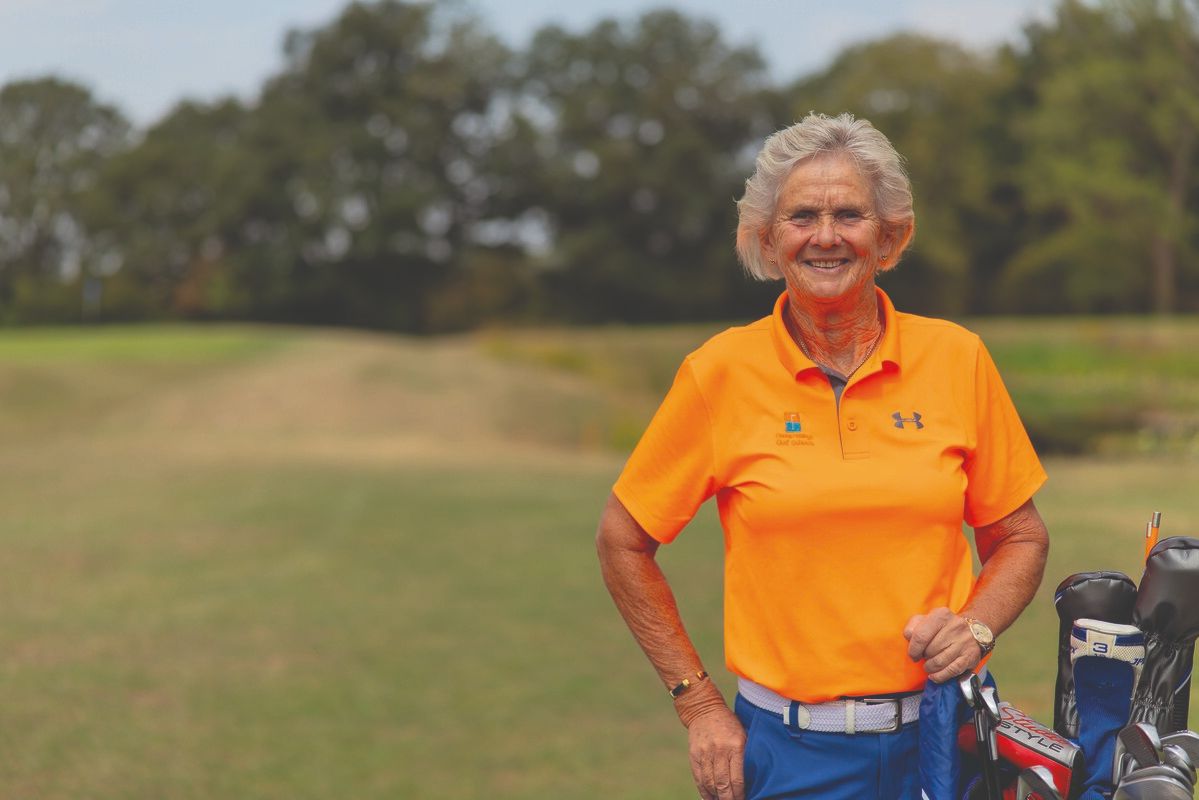
Pictured: Denise Hastings
When tech changed the lesson bay
We've got TrackMan on the range and I've also got a FlightScope and the instant feedback is incredible.
Being able to do the slow-mo made a massive difference, because the difference of feel and real. You could actually say, this is what you're looking like, but you don't feel like this. And they understand it so much better.
It might be something simple and subtle, like the structure of the right arm and where it should be, and the modern technology made it quite exciting, because every lesson that we gave, we were learning from what we could see. The feel and real element is saying this is what you feel like, but this is what you look like. So that made a massive difference.
Knowing what every golfer really needs
You've got two types of people. You've got the person who's completely into the swing, has looked on YouTube and Instagram, and looked at the way Tiger's swung it and they want their version of that. They've got an image of what they think they want but, again, feel and real is very different.
And then you've got the other person who says, don't show me that, just me in position and keep it simple. It's the way people are and the way they learn. Some people want to see a video, some people want to be put in a position. At the end of the day, they all want to be better, but we all learn differently.
Video and the large monitors have helped but not necessarily the very new players as they can get bogged down on numbers, when really it's more about getting the ball in the air and on the fairway. People can get obsessed with the numbers and not obsessed with where the ball goes. A lot of young guys especially now just want to smash it.
“That PGA badge is so important as everyone in the game knows what The PGA stands for and it is still head and shoulders above anything else” - Denise Hastings
Why straight is not always the answer
People still believe they should hit it in a straight line and it's not a straight-line game. You look at the best players on the tour, they're shaping it because it's easier to shape it than to hit it dead straight. Even a machine doesn't hit it dead straight.
Getting players to understand the fact that it's not about hitting it in a straight line is a must. The top players in the world don't, they keep it in play and they've got a shape that they're happy with. They're not trying to hit it straight.
A lot of amateurs don't get that and it's our job to educate the people who come for lessons that hitting it straight is hitting it on the fairway. Once they can come to terms with that, then they will score better because at the end of the day, the score is what everybody wants to change straightaway.
But that's probably the last part of the food chain, hitting it more consistently, having a better contact in understanding the low point and then, as the player gets better, the flight and being able to control that. That's what makes a good golfer but it's not a straight line.
Speaking the golfer’s language
This definitely has changed. It's changed purely because of high-speed cameras and launch monitors and the P system. A lot of Pros use that, a lot don't.
But it also depends on the person in front of you. If you've got someone who's a mid to high handicap, the last thing I want to do is confuse the person. So I will speak to them in a language that they understand rather than just bamboozle them.
The first thing that they do when looking at a launch monitor is to ask what certain numbers mean. Some are happy to know the numbers but often don't understand the consequence of them.
The language that I use will be dependent on the person in front of me. And often that is to keep it simple so they understand it. Because at the end of the day, they've got to go off and practise and then come back. And if it's too technical, which some people want, it can put people off.
After speaking to someone for a little while and watching them hit a few shots, you will known how to modify the language to suit them. Because at the end of the day, they're the people who are paying you.
Technology is fantastic, but it's a tool at the end of the day. It's a tool to help me as a coach improve you as the pupil.
Pictured: Denise Hastings
The lesson that started it all
Vivien would give a lesson and she would say, just more or less do what I've done. I was like a sponge, I knew how to play but I didn't necessarily know how to teach. And watching her do all of her clinics for the golf schools, she was super popular and very good.
The first lesson that I gave on my own was to a junior girl and then I gave her mum a lesson. I basically did what Vivien did; check the grip, alignment and the face and the first thing was to just get the thing in the air.
Then you began to understand more about the importance of going through the fundamentals and making sure all those were right before they made a swing.
We're all guilty of giving the wrong information to people at times. And that's due to the person in front of you, plus our lack of knowledge. As young coaches, the more you learn, the more you teach, the more you learn.
Why great coaches never stop learning
Coaches should continuously question themselves to make them better. As young coaches coming into the business now, then you've got to not necessarily look at the person next door, but be the best version of you that you can be. Chase your dream of being really good.
Go and watch people. There are so many Pros out there who are more than happy to help young girls and boys and Professionals to understand a bit more by watching them and going on seminars. I will continue to do that until the day I die. I really love seeing the way other people do things. You might not like it or agree with it but there will always be something that you can take away.
That's what I would definitely recommend, watch as many people as you can and ask questions. Don't be scared of asking for help.
“High-speed cameras, large monitors, TrackMan, FlightScope and instant slow-motion playback have transformed what coaches can measure, show and explain in real time” - Denise Hastings
The badge, the craft and 125 years of pride
It is the best thing I ever did after playing on tour. That PGA badge is so important as everyone in the game knows what The PGA stands for and it is still head and shoulders above anything else. People respect that PGA badge and it really is a badge of honour.
The coaches who get the good jobs are the ones who will always continue to do CPD or online courses and go and watch other coaches around the world and spend whatever money they've earned to go watch the likes of the world's best and spend time with them and learn the craft. Because that's what it is, it's a craft and I'm super proud of being a PGA Professional.