


Developing a coaching philosophy is not something that is achieved overnight.
PGA Coaches have the privilege of working with a wide range of golfers at different stages of their golfing lives, with different capabilities and motivations.
Understanding all of these aspects can be crucial not just in helping golfers enjoy the game, but also to form a coaching philosophy that is adaptable and applicable for different players.
In this thought-provoking piece, Dr Howie Carson, a PGA Fellow Coach and Senior Lecturer at the University of Edinburgh, challenges you to explore how your philosophy can evolve over time to make you a better coach.
Your philosophy should account for the diverse needs of your players
Your philosophy could be influenced by your role and who your clients are.
It might be corporate events. It might be junior coaching camps. If your role is to entertain, your philosophy or your view of what good practice is will be very different to somebody who is a performance golf coach for one of the national teams.
For the majority of PGA Members, they're dealing with a whole range of different players, from your absolute novice who's never played before, to aspiring, high level junior players.
Having a philosophy that accounts for diversity is really important.
You could have two 9-handicap players. One played off scratch when they were young, and has all of that past experience to go by, but just doesn't have the time to practise. The other is on their way down from a high handicap, and very keen to practise.
They are very different individuals. Your values, beliefs, practices and ways of working need to accommodate them both. There is a lot more to it than just: are you male or female, and what's your handicap?
That needs to be something that drives the way that you coach.
Some of the factors to consider as part of your philosophy
If you think about your philosophy as being a pair of glasses, you have an appropriate prescription, which allows me to see things clearly.
It's essentially what you value, your beliefs and your understanding of the world. This should then influence how you practice, what CPD you do, how you interact with other golf coaches.
It's a belief system. A very sophisticated philosophy is that we live in a complex world that is influenced by a whole range of different factors, depending on somebody's age, what country they're brought up in, their physical capabilities, their mental capabilities, their financial resources, their personality, if they have any health conditions.
There are many things that are physically, psychologically and socially derived that means that person, that person and that person is meaningfully different, to make me consider different ways of doing it.
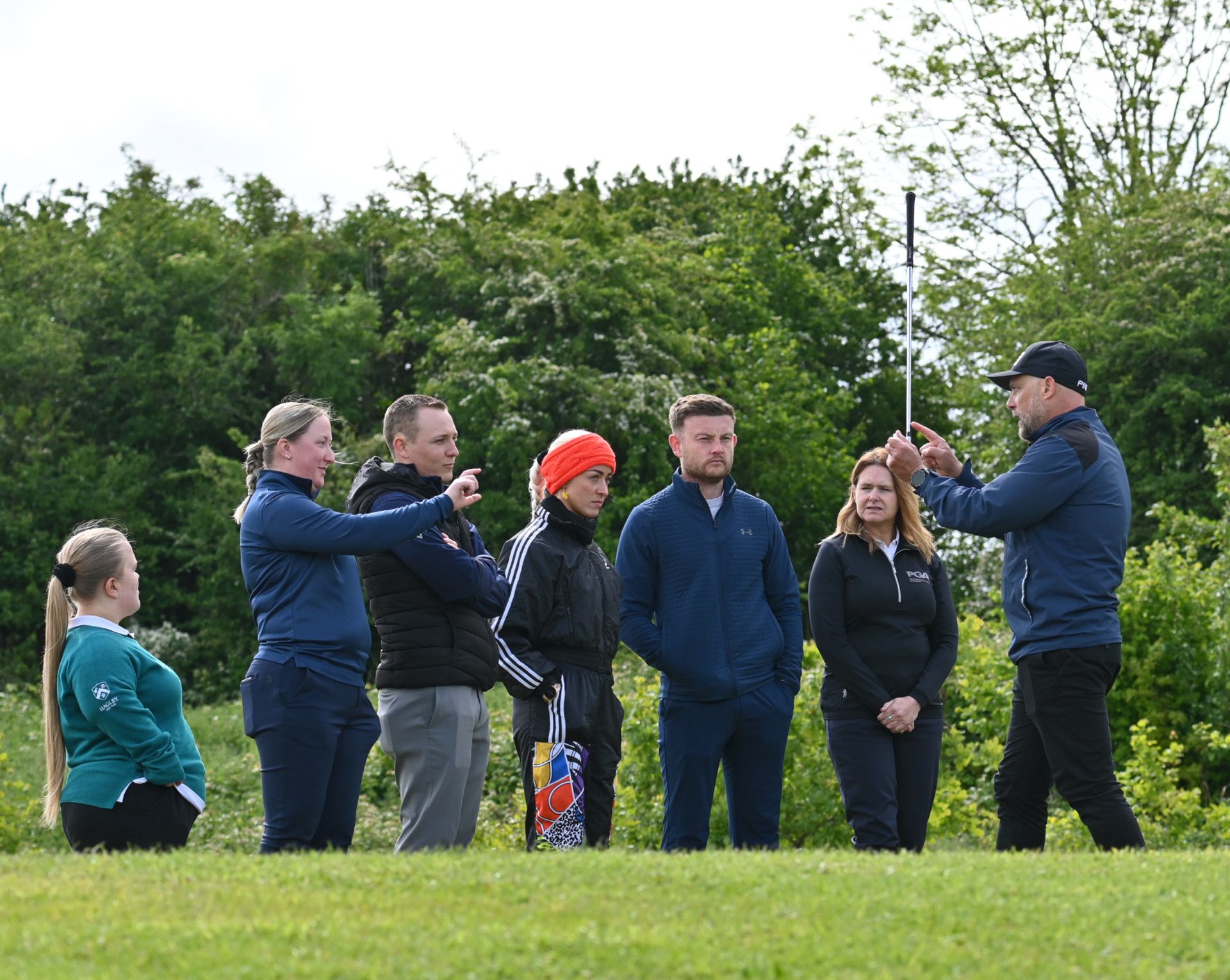
Pictured: PGA Fellow Coach Dr Howie Carson
The importance of changing with the times
I come from the philosophical view that the world is nuanced – and you have to change with the times. Look at golf coaching since the advent of technology.
My golf coach used to do a video recording on VHS with his commentary, and it was showing the screen, and the player comparisons.
Look how technology has moved on now. Back then, you would regard that as being outstanding coaching. Nowadays, you would accept that as normal coaching.
Unless you change with the times, what impact are you going to have on your players?
Some might like the old-school approach and not too technical, and that's fine, so you have to work with them based on how they respond best.
The value of asking why
‘Why’ is one of the most fundamental aspects of being able to develop a philosophy. Do you understand why somebody did something – or why did it work with this person, but not with that person? If so, it allows you to dig deeper into what's actually happening in the scenario.
If you just watched Pete Cowan coach, you'll only ever know what he did. You won't understand why he did it. You could then go and take that to your players. For 75% of them, you might have a positive impact if what Pete Cowan was doing was generally good practice.
But for those 25% who might not have benefited, they’d be none the wiser as to why that didn’t help them. Should you have done something differently?
You can either go out of your sport and start to experience other challenges and see how they relate to golf, or broaden your clientele, and asking ‘why’.
Developing and evolving your coaching philosophy over time
This isn't a one-stop shop, and it doesn't happen overnight. Because it's your philosophy, you're the one who's going to have to do a lot of the ruminating.
If you have an adaptive outlook, listening to another coach, talking about their session - you might need to tweak it rather than saying, “They said that was effective, so I'm going to try it.”
The hope is there's what's called this philosophical chain. There should be a link between how we understand and think and that's how you work with a client.