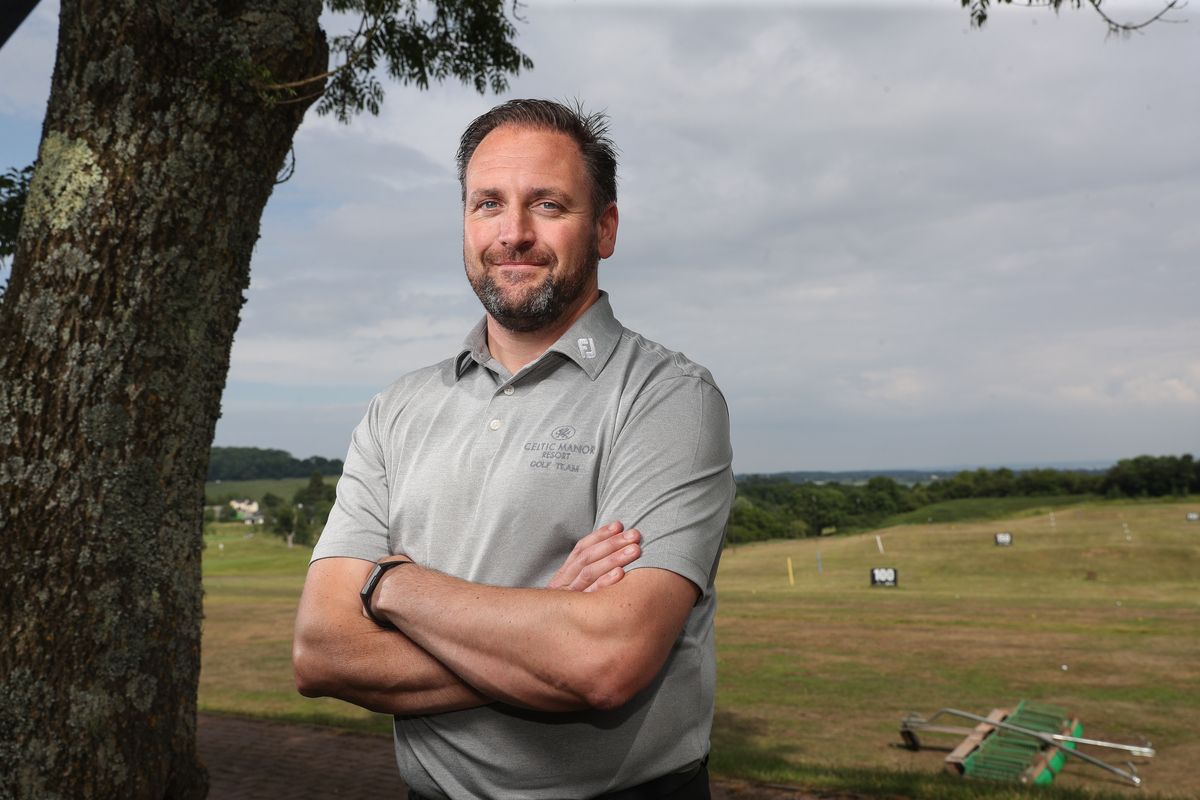


Mike Timson is the General Manager at Langley Park GC in Kent and an Advanced PGA Professional.
In the past year he completed the League Managers Association (LMA) Postgraduate Award in Strategic Leadership to take his management skills to new levels. The course showcases the collaboration between The PGA and leading sports bodies.
Students complete a nine-month course at the University of Liverpool on leadership, strategy and governance, and share their experiences from the world of football, cricket, rugby union and, of course, golf.
The Award is a Master’s Level, academically accredited programme that combines knowledge and experience from the academic, sports and business worlds.
The programme aims to prepare participants for a successful transition to the next level in their career, and equip students with a skillset and framework to from their leadership and strategic thinking. The Award is delivered in two core modules: Leadership, and Strategy and Governance.
Here, Timson shares his experiences of the course.
Why did you go into management in the first place?
My career started off as a player, then I ran golf shops and was a Head Pro and then I went into management because I wasn't generally working for great managers and I wanted to be the person on the inside.
I'm a strong believer that the PGA Professional is the most important person at the golf club, rather than the manager, because that's the person who interacts most with the members. So I thought I'd actually step up into management in 2017 because, when you run your own shop and you're in golf, you know every angle of it which was a great starting point.
Also because I've got a really big interest in agronomy as well. I don't believe in man-made chemicals and I did my agronomy studies at Florida State University and, four years ago, I got headhunted to go over there to open up the first 100 per cent natural, organic golf course in Florida. Now I've come back to the UK to do virtually do the same.
What's surprised you about the management side?
The lack of strategy from golf clubs, really, is the key. The committees change every year, the captain gets too much power and the governance side of golf clubs is crucial. We've never really modernised and moved with the times – it should all start from good governance and good practice and a vision and a strategy.
A strong club will work with the Pro and that really helps to get things in a good space.
Pictured: Advanced PGA Professional Mike Timson
Why did you initially get involved in CPD?
I always think that you should upskill yourself. As a Pro I thought that if I could upskill myself, then I would be the expert when there were conversations around the table. I used to do a lot of one-day courses with the PGA and then I started going online and doing my own stuff. I did the Director of Golf course, the rules course and the short-game master classes. Then obviously, as I stepped up into management, it's been a lot more focused on that side so I did my financial accounting exams and now the agronomy.
What made you decide to embark on the LMA course?
I wanted to focus on the governance side to give me a backbone of what you do for strategic governance. I thought, I've got time – it took around 16 hours a month – there were Zoom sessions which you could fit in with your working day. A lot of it was online learning, there were six assignments and you had to do real-life scenarios where you learnt about the structure of sporting governance and the reason why it's so important.
It's taught me how to probably clarify it a little bit more for me as a leader and how other people work under you around that. It's brought that strategic thinking into the golf club as well, how you manage up and how you manage down as well. So it gives you a little bit more clarity on thinking and a few more strategies to achieve.
Can you give an example of how it's already impacted your working life?
I started here in June 2024 and we had a 24-strong committee. Having gone through the course I started looking at the different theories of how to manage and that's already brought in a new governance structure into the golf club. We now have new bylaws and articles of association for the club and actually a different management structure at the club.
So, instead of going from a 14-board strong where the captain has a lot of say, we've now got five board directors and then sub-committees from that. So it's actually brought in a better strategic governance for the club actually on the back of that. It was going that way anyway but it's brought clarity and structure to that process.
Has it changed you as a manager?
Definitely, it's the 15th club in the bag. A lot of my peers never stand up and be counted because they always sit on the fence because they think they're going to upset the golf club.
But, actually, you're the expert in golf. You're the most trained person on site and not many of us use that expertise and use it to back things up. I do have more confidence and people find you a bit more, if that makes sense, as they know that you've done it. You've got to stay current and you've got to stay above the game. Once you're standing still, you're going backwards.
What would be your message to further your knowledge as a PGA Pro?
There are so many different courses to get involved in, for example the TrackMan and Foresight ones, so it can be relevant to all aspects of the job.
Not enough Pros get involved in CPD but the ones who do, the ones who upskill themselves as Pros and as managers are the ones who get all the jobs. You see them on LinkedIn, they're very vocal, they're very public about themselves and they're the ones who walk into the better paid jobs and have a better skillset.
-
PGA Members are strongly advised to complete the PGA Director of Golf Qualification before starting the League Managers Association (LMA) Postgraduate Award in Strategic Leadership
-
Click here to find details of the next Director of Golf Induction, which is on March 18.