
The ACED Academy at Blackwell Grange is one of the most successful junior programmes in the UK. It's run by PGA Professional Aaron Cox who has taken the junior membership from two to close to 150.
Cox, who did his PGA training in Victoria, Australia, grew up playing with Jason Day. He played in the 2010 and 2011 Australian Opens, hitting balls next to Tiger Woods and Bubba Watson.
Since moving to the UK, he has won the Participation and Development Coach of the Year at the England Golf Awards in 2022, after building a six-hole kids' course at the Durham club as well as introducing hundreds of juniors to the game.
He explains how juniors can best develop their skills as they move into and then through their teenage years – from beginners to elite golfers.
Make the first stage – structured – fun
I've got raw beginners who are 13 and I've got raw beginners who are 6 and 7. I have a very structured programme and I have a very structured way of teaching. I'm a results-based coach so I want to see the kids getting better. I'm just not taking the money off the parents to do these classes for them just to be a crèche. I want to see these kids get better.
But I obviously keep it relaxed and I make it fun for them because I think the fun part comes from them actually achieving their goals of hitting a nice shot and getting the ball up off the ground or in the hole.
But I'm also very much about making sure that they understand the fundamentals. I have seven of them and it's almost like I drill it into their heads. So as soon as I say the words, they all know what I'm talking about.
They are G-A-S-P-T-T-R. That is: Grip, Aim, Stance, Posture, Takeaway, Triangle, Rotation.
That's my core structure of how I teach kids how to play golf, but then also how I keep it relaxed.
Is it fun? Yes. I'm an Aussie, so I'm always making it fun. But I make it fun in an instructive kind of way. And that's how I get the kids engaged.
I've got no problem with the parents sitting in and watching but I get physical with the kids –I will actually hold them and get them into position. I hold their arms, turn their shoulders and show them how to make the right movements. You can't really do that if you're standing off them.
I've built a six-hole kids' course next to the 18th so, through the summer, every class is out there and we're actually playing golf. We're learning new shots, distance control, shot selection, chipping, putting and just playing the holes.
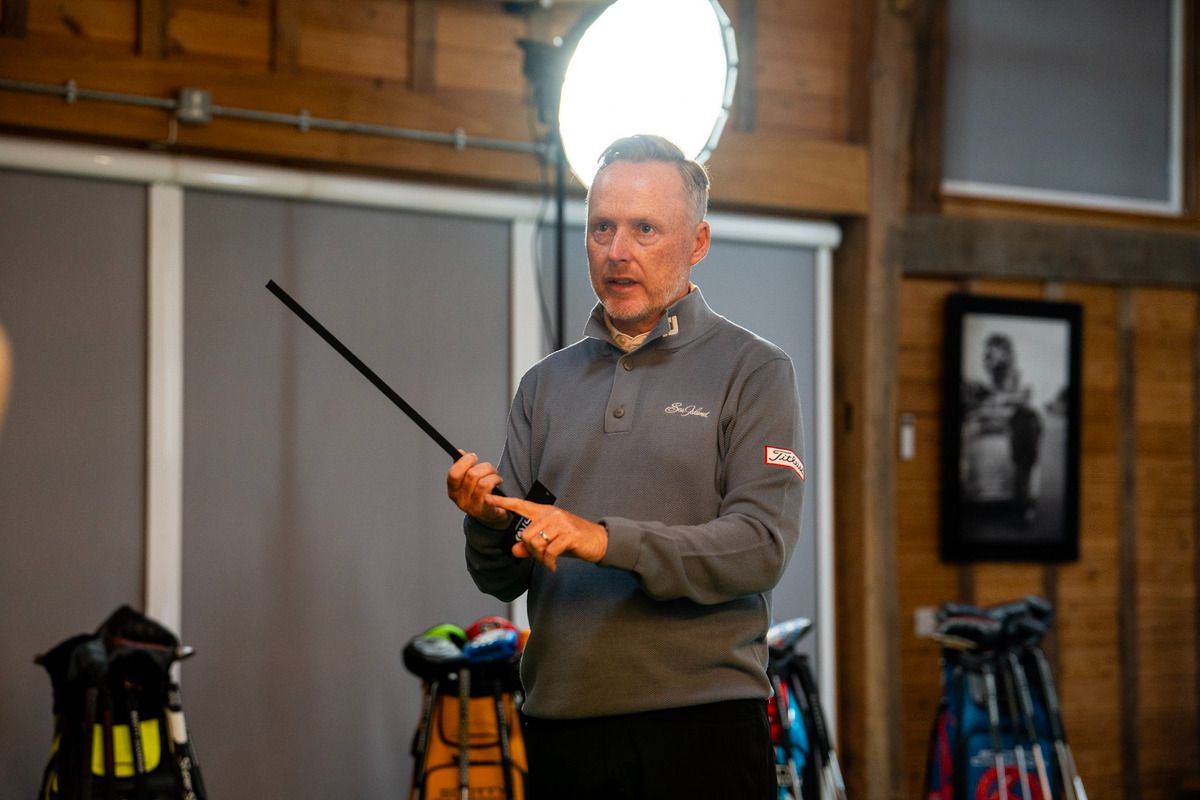
Pictured: PGA Professional Aaron Cox
Create a plan to ensure progress
If you're looking at transitioning from your basic classes, we've got an elite development programme which I've been doing for the last five years. I've incorporated fitness, physiotherapy and mental coaching into this and I actually have a mental coach to teach them about that side of the game on the course.
Those kids who are around a 20 handicap will get an invite and then I make it my sole goal to get those kids to somewhere near a 10 handicap in that 12-month period. I've had three young girls, who are all now 13, and they were all in the 20s when they joined the programme and two of them are now down to nine and one is down to six.
Adapt your language to deal with various ability levels
It varies within a group. I've got one kid who's just started his second block with me, and he's 13, and he's just beginning.
The challenge is how do you adapt things when in the same class as a beginner you've got a nine-year-old who's been playing for three years? And the nine-year-old is able to hit a 3-wood off the deck and we can have a conversation about how to hit a fade or a draw and he'll ask questions about ball position.
It's all about the language. The nine-year-old's golf brain is really starting to get bigger and a lot wider and he will understand every word. So I would teach him almost like I would an 18-year-old as he understands it.
Whereas with the beginner, I'm going back to just literally a very basic understanding of the swing and the movement. So, this is how you do A, this is how you do B, this is how you do C. And then go through those seven fundamentals.
As a golf coach to kids, you have to adapt so quickly. Your mind has to be going very quickly. So many golf pros don't get massively in-depth with kids' junior coaching because they can't mentally or physically take it. It's not the fact that they don't know it, they can teach it but one skill that you definitely need is to be able to adapt.
Consider your group sizes
I've got nine classes and I have 103 kids per week – you're looking at between 10 and 12 per class. Compared to other sports with smaller group numbers, I push the envelope a bit more. What I do differently with my classes is through the winter. Obviously, we're on the range, and I will pair the kids up.
I will try to put two kids together who are a very similar ability, age and kind of understand each other but also they'll be good mates. After a while they will start going into their own bays before I even say anything.
Then, by the summer, they will be even better mates and they'll be out on the course, which is more manageable.
It is hard work and it's mentally straining because you have to adapt so much but, with a structured programme, I can keep the kids engaged, having fun and always improving.
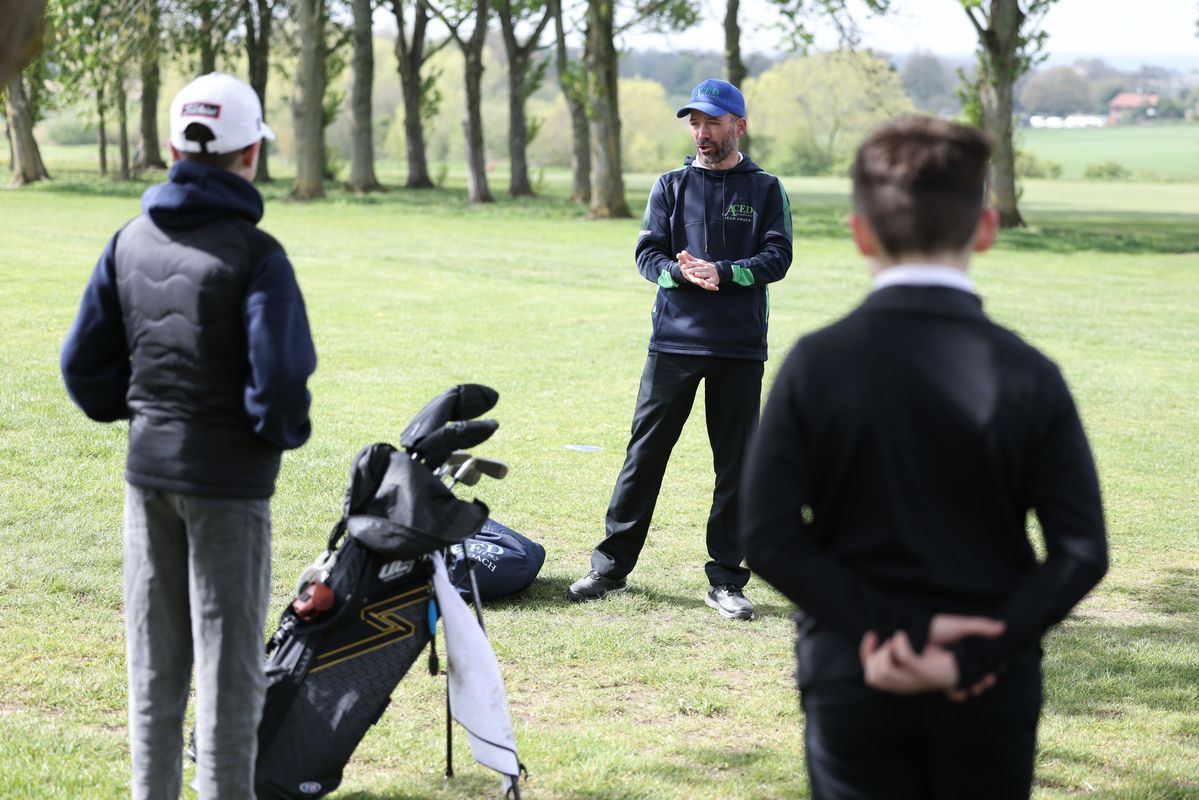
Pictured: PGA Professional Aaron Cox in action
Make sure the playing field matches the ability
We have the six-hole kids' course and they will join so that they're getting a membership to their own golf course, which gives them a bit of ownership. Then you introduce them to competitions on the kids' course and they'll play my little 12-hole competitions and they will get a handicap.
Then they learn about Order of Merit Tournaments, playing for some prizes and then all of a sudden, they transition into Golf Sixes where they will represent the club, my academy and play against other kids from local golf clubs.
From there they will play a shortened course on the main course, off the blue tees which have a Slope Rating by England Golf. So now they've got a 3,800-yard course to go and get their main course handicap.
After 12 months on that they will almost be pushing back to the yellows or the reds so it's all very structured and in place for them to get going in the game.
By that time, if you're playing yellows and whites, they're a good teenager.
I’ve created the structure and the stepping stones out of nothing – when I first got to Blackwell seven years ago there were four active junior members.
I'm now pushing 150 junior members on the books that are actively playing and nearly 60 of them have handicaps.
When a kid joins and we mention the kids' course and playing competitions, the parents will ask about handicaps and they just have to play three rounds of six holes to gain one. All of a sudden, they are all out there playing six holes.
Through the winter I've had full classes from September onwards and the kids are just absolutely just loving it, hitting balls and still learning in three layers of clothing.
“It is hard work and it's mentally straining because you have to adapt so much but, with a structured programme, I can keep the kids engaged, having fun and always improving” - Aaron Cox
Change your methods at elite level
A few of my kids are now in an elite development group which is a group of seven and then from there they move on to one-on-one. As soon as they come into my elite programme, they say goodbye to all the classes and things move up another level.
I've got a kid who I've had now for four years, and he started with a handicap of 54.4 and he's now off +1.4. He's now in the under-18 county boys and he's been asked to join the men's squad for this year. He's doing his A-Levels now and he's looking at US colleges.
He's definitely the epitome of what you'd love to see in a kid who could go through four or five years of development from age 12 to having a plus handicap.
You would want to see these types of players once a week or two weeks, depending on how much practice they're doing. I'll set these players assignments on Toptracer as I've got access to their coaching programme.
For example, on a Sunday night in the winter I'll set them some tests so they're doing some proper practice and not just hitting balls for the sake of it and then I'll call them in for some one-on-one time.