
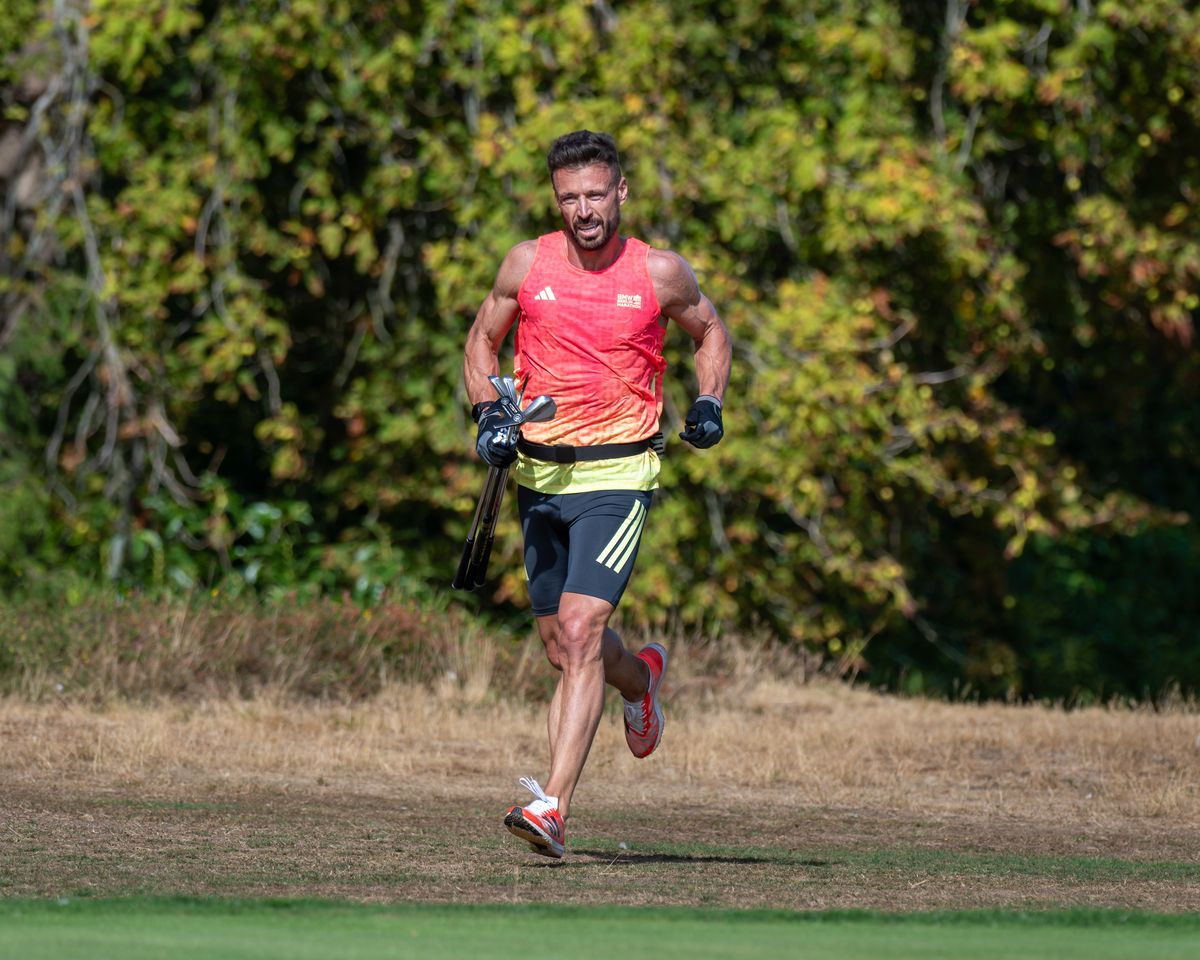

PGA Advanced Professional Justyn Branton explains why the triad between the player, coach and parent is fundamental to successful and lasting relationships with young players.
After an initial career spent working as a geologist and three years in education, Justyn Branton began his training with The PGA before becoming a Member and then following that up with a Master’s in Philosophy, Coaching and Education at the University of Birmingham in 2013.
Here he was looking at talent development pathways where relationships between parents, coach and athletes were examined. Branton started working for The PGA as a regional coach development officer in 2008 and spent 10 years in that role. In addition, he developed the County Academy Programme which looked at a structured pathway to bring young people into the game of golf, with a focus on coach development and the retention of participants.
He has also examined structural problems within the golf industry and he became a business relationship officer at The PGA where his primary role was to develop insight into the golf industry in terms of certain sectors.
He now works as a Director and Founder of ClimateWise but still consults as well as helping year-three candidates with their final exams.
Here, Branton shares his experience and findings on developing junior golfers from a coach’s perspective.
Why kids start playing
Golf is a very individual sport and, for some juniors, that's quite attractive. I probably shouldn’t even use the word sport because that can be a real de-motivator for a significant proportion of young people. So if we say activity, it's an activity that we can do for literally the rest of our life. I started playing when I was two years old. I would jump on the back of my mum's golf bag and she used to drag me around the course.
What kept me sustained as I got better was the ability to engage and play with my parents, my family members and then friends and it became a social aspect.
In later years, it was this activity that bound the family unit together and gave us that point of reference. So for me, it was the social aspect that really got me involved and then the foundations of competitive golf followed. Latterly, I then morphed back out of competition and back into a social aspect.
Golf is one of those sports that you can play for the rest of your life so it's very attractive from that point of view.
You see the information from other organisations in the golf industry where the focus for young people is on the ability to talk to adults or learning your numbers and etiquette. But these are not drivers for young people – the drivers for young people are social engagement and fun.
If you can emphasise that you can have fun as a family or with our peers, and you're not judged within a team, then that can be a huge motivation. If you play badly in football, you feel like we're letting the team down. If you play badly in golf, the only person we're letting down is yourself. In many ways there's less pressure when taking up the game.
What is the most powerful way to learn?
There's no one way. When you hear someone saying I'm a visual learner or I'm an audio learner, they're not. They may have a preference but you learn through all those mediums – kinaesthetic, audio, visual. Actually you should have all of that within your coaching environment because it then provides reinforcement of knowledge and experience.
People quite often learn through trial and error. When you look at a young child walking for the very first time, they fall over and over again but they get back up and have another go.
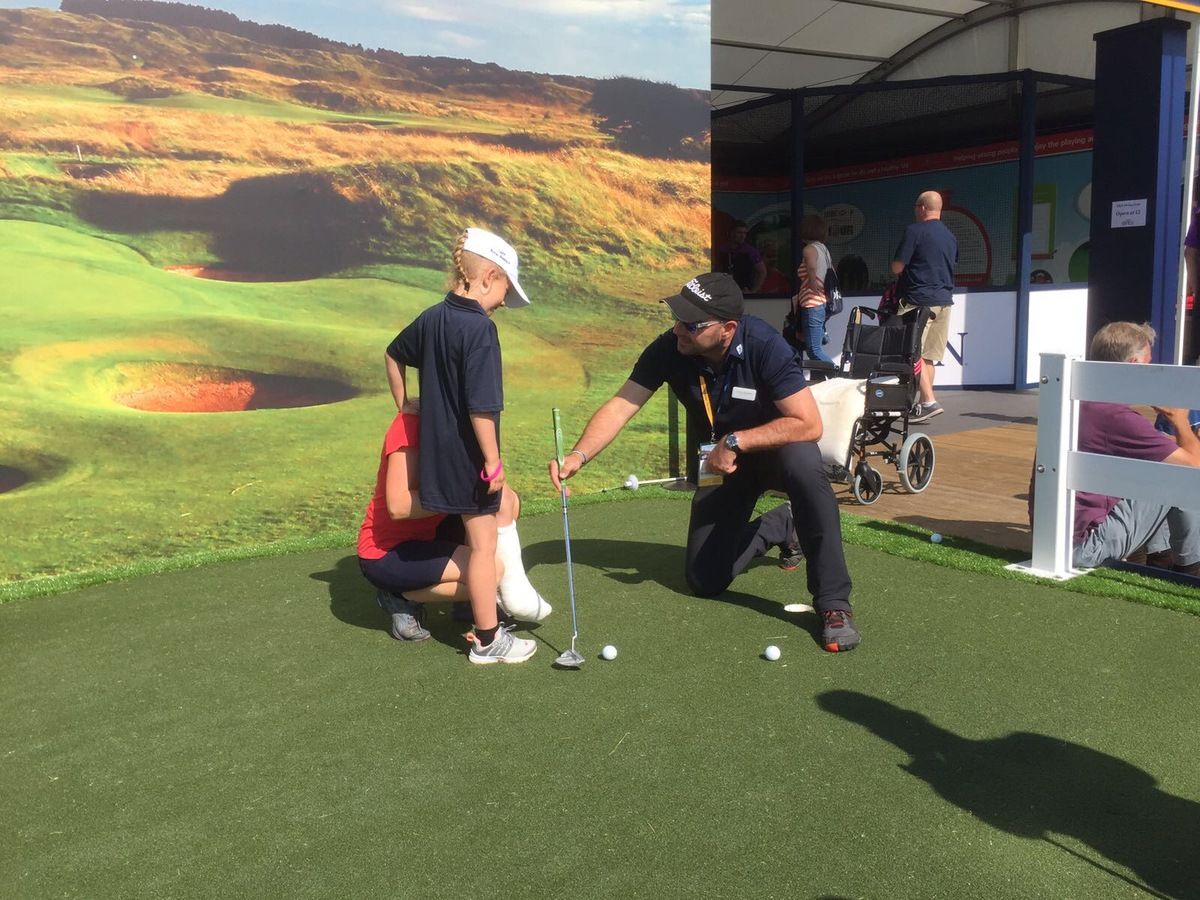
For me, certainly for young people, it's around that guided discovery and teaching games for understanding where you create environments for people to learn but you don't provide the information. I will try to create an environment for someone to learn in and then they find their own way to actually master that skill.
It's about empowering young people. For example, if you are doing the short game, ask what areas in the short game that they want to learn? Is it chipping? Is it pitching? Is it bunker play? So you give young people choice. When they have choice, they feel ownership.
And when there's ownership, there's a sense of responsibility and a kind of respect within that environment. And then whatever the outcome is, as a coach, you should be able to adapt and go, OK, you’re going to do this but these are the challenges.
So, say, you'll do bunker play, you’ll have a deep bunker, a shallow bunker and short and long bunker shots and then you'll create a scoring game. Then, if you're doing it in pairs or within a group, you can go off and compete against your friends and then you'll come back together and see what you've learned.
Then you can demonstrate to me how you learned to get out of the bunker and I can almost guarantee that how you learned to get out of a bunker and how your friend or opposition group learned to get out of a bunker might be different, and that's fine because there are multiple ways to get out of the bunker.
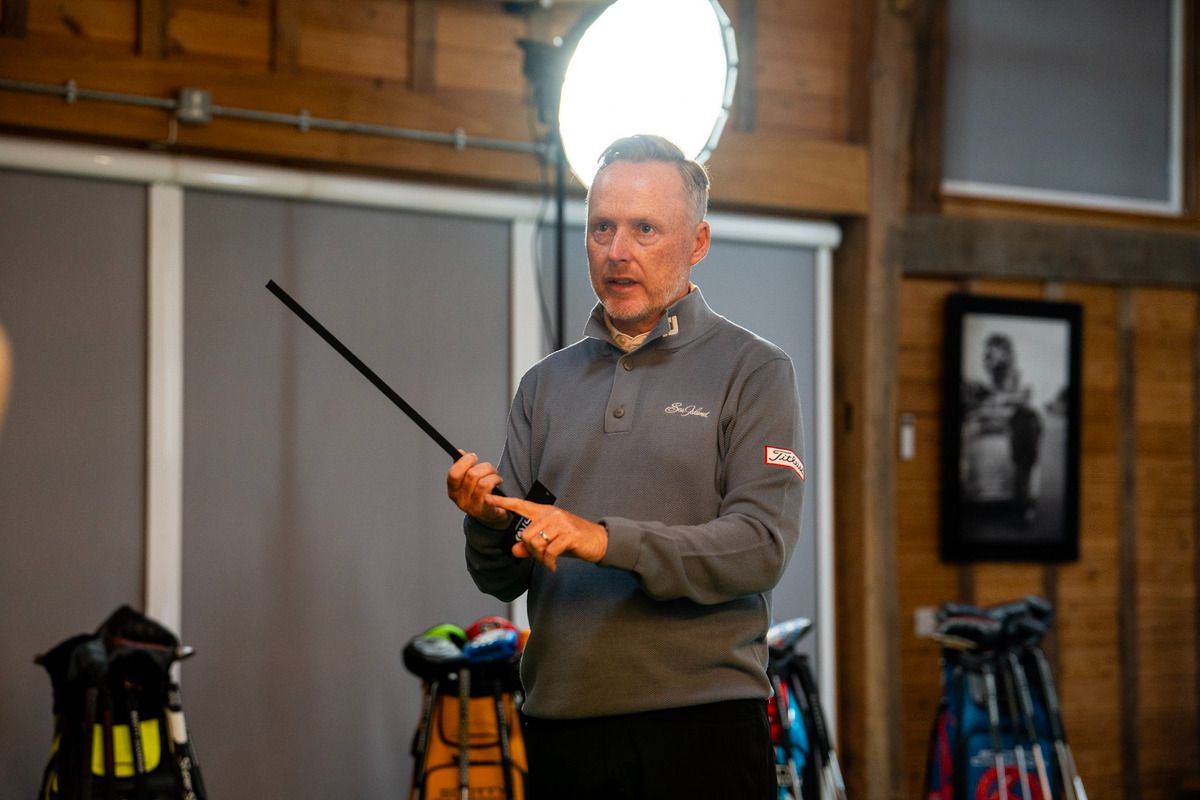
Pictured: PGA Advanced Professional Justyn Branton
Showing can be more powerful than telling
A good addition is to show the group how you did it but you're not allowed to say what you did.
Everybody else just has to observe and, at the end of it, you'll just have conversations. What did they do differently from the other person? And then you can identify the different ways.
They have learned for themselves how to get out of the bunker. They watched other people get out of the bunker and then they have conversations about how to get out of the bunker.
They might discover that there are four or five different ways to get out of the bunker and then the challenge would be to go off and practise all of them – and then come back and tell me which one is your favourite way. So I'm not installing my favourite way of getting out of the bunker and how I do it but I'm encouraging you to go and learn the best way for you to play the shot.
You create an environment where there are opportunities to learn without being totally constrained within one particular area and that's how you get engagement.
You all see it with your own children. When they learn something and they're really excited, they come back and tell you. The joy that they've learned from discovering something themselves is far greater than someone who's given them some information and they're just regurgitating it.
The art of listening and involving your students
The really good coaches tend to listen to their student rather than giving information. Giving information is a shortcut but it very rarely embeds that information. But some information that you've learned, and then you reinforce it through the games and skills, that becomes embedded and becomes a habit.
If, for example, a player was hooking shots, I would put them on the driving range on the left-hand side next to the net. There is a visual constraint saying if you hook it, you're going to hit the net.
And automatically, people try and hit away from the net – it straightens up. You create a structure where you have these constraints but allow some freedom to experiment. And then let your subject come back and tell you what they've done.
Negotiating the transition from child to young adult
When children first come into the game, let's say at 10 years old, they're probably getting into the game because they have a family member who probably plays the game. It's fun, they might have group lessons with other juniors and they will build some social bonds with that particular group.
It should all be around fun and enjoyment and having a laugh but it should also be trying to engage the adults at the same time to go and play with their kids as well.
As a child gets slightly older into the teenage years, there's probably a progress in terms that they're moving out of purely fun into I still want to have fun but now I'm really quite enjoying this game and I want to do it more competitively. They might be representing the club in junior competitions and trying to get their handicap down and there's an element of performance to it.
As a young person, under the age of 13, kids are very good at talking to their parents and parents are very good at talking to their kids. Then the child stops talking quite so much to the parent or guardian and starts conferring more with the coach because the perception is that the parents don't really know what they're talking about.
They're developing their relationship with the coach and therefore it's more about the coach-athlete rather than the parent-athlete relationship.
The parents, historically, maybe haven't been engaged as they've been in the coffee shop or on the golf course doing their own thing or even gone off shopping. So there hasn't been a lot of engagement with the parents.
Now, it's usually not an issue if you have parents or guardians who are avid golfers. But as a child stops talking to the parents, the parents' noses are put out of joint slightly.
I'm the one transporting you. I'm the taxi. I'm also the bill payer. I'm providing the opportunity. I've bought your membership. I've bought your clubs. And you're not telling me anything. You start to feel a little bit isolated and a bit annoyed because, actually, you're making all these sacrifices and you're getting nothing back in return.
Ideally, what a coach should be doing is actually understanding this is happening and realising that.
Quite often women tend to be much more supportive of their children than men. Men can get a little bit more frustrated. That's obviously not a hard-and-fast rule but it's a generalisation.
If I was a really good coach, I'd understand this is happening. And I'd want the parents to be involved.
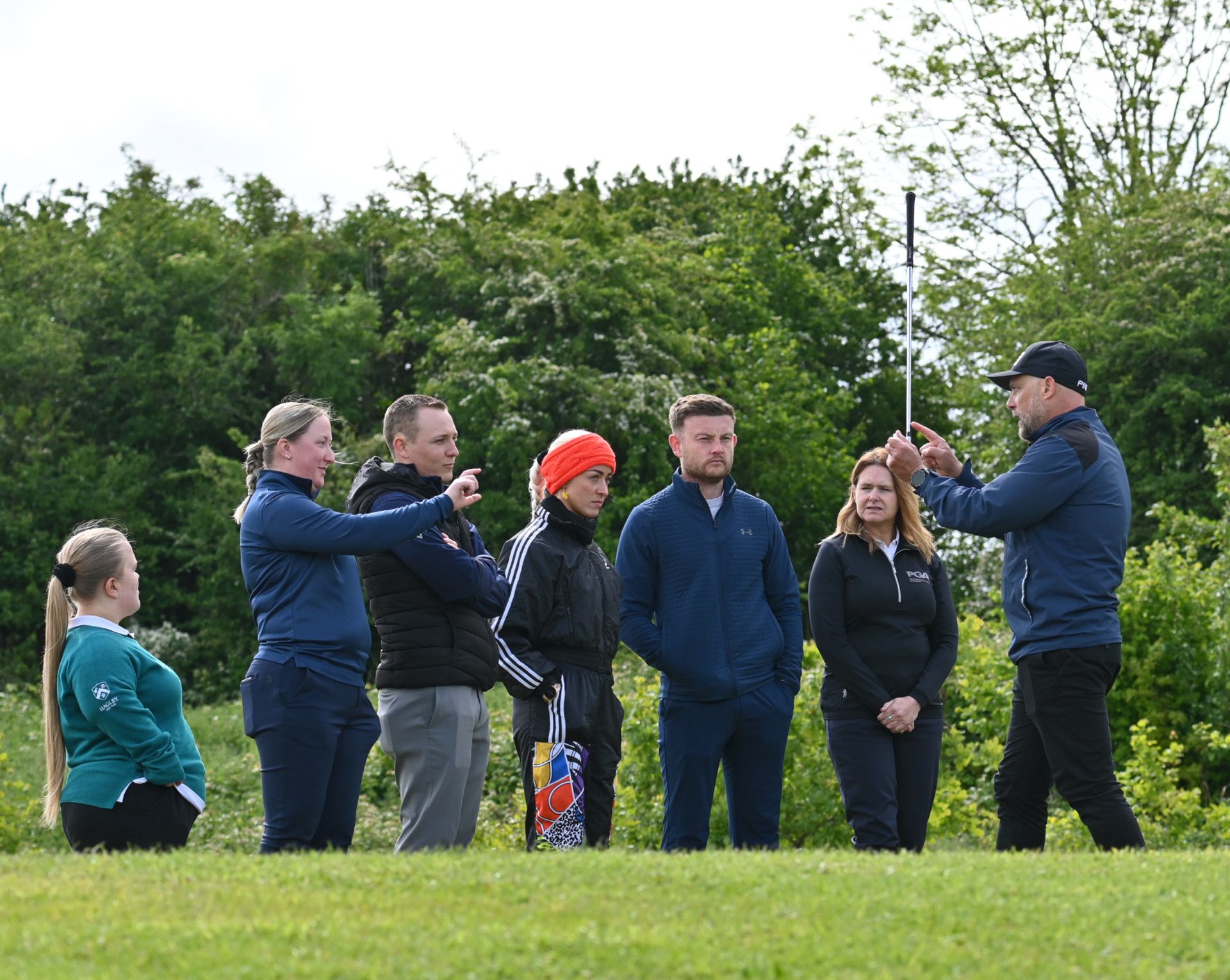
The best way to do it is actually to spend some time with the parents, either at the end of session or once a month. Bring all the parents together, saying this is what we're doing, this is what's happening. These are their goals. This is how you can help and actually make it part of your structured coaching in terms to engage the parents so they don't feel isolated and alone.
“If you develop a really good relationship with the parents, quite often they'll be the third party that helps smooth over any issues that can maintain that coach-athlete relationship for far longer” - Justyn Branton
Develop ownership from the child – and the parents
When I was doing my Master’s research, there was a really interesting story where a coach was telling me that he had a +3 player and he was fantastically good but that he could have been one or two shots better.
He said that the child was hitting shots and his mum would then go out onto the range, pick up the balls and bring the balls back. He wanted the chance for the boy to pick up the balls for himself so he would learn about his scatter patterns.
If you're hitting 100 balls, you're really focused on trying to get those balls as tightly packed together as possible because, if you're the one picking them up, it takes ages if they're all over the place. I asked if he ever spoke to the mum and he said no, explaining that she was only trying to do the right thing and be helpful.
But if you don't bring the parents or the guardian with you, how are they meant to know what the best thing is for their child?
If you were to sit down and say, this is the next stage of development for your child and that they need to start taking ownership, then every parent will recognise that because that's what every parent tries to do. They're trying to get their children to take ownership of every element of their life. So when they leave home, they are ready and prepared for life. It's a natural process.
You just have to engage the parents because they think they're doing the right thing. A little bit of education in a really proactive and confidential manner can be really, really engaging.
My experience in terms of dealing with coaches is, more often than not, they'll talk to parents about the weather and the traffic and all the normal things that Brits talk about but none of it is really about how they can create an environment that allows their child to thrive.
The parent can feel left out when a child begins to develop their skills when what you should be looking for is a three-way relationship where you're all working together.
The child doesn't have to engage as the torture of explaining something for a second time is unbearable for the majority of them, and that is totally natural in human behaviour. But as a coach, you can circumvent that by involving the parents so they don't have to feel isolated and can still follow that process.
The athlete can still talk to the coach because the athlete still has this tremendous respect for the coach because they are the professional. So they're going to talk about their trajectory and where they're going and what they want to do but if they all work together and they're all pulling in the same direction, then there's no conflict.
When there's been conflict, and a parent or guardian has felt put out of joint, they've quite often facilitated the change and press to look for a new coach.
You've had this long-term engagement with the coach who knows this child the best and that engagement can be cut off because the parent wants to move on to a perceived better coach.
If you develop a really good relationship with the parents, quite often they'll be the third party that helps smooth over any issues that can maintain that coach-athlete relationship for far longer. Because they'll turn around and go, nobody knows you better than Coach A or Coach B, they've helped get you to this point, they know the way that you think and your stresses because they know you the best and that has tremendous benefits for the child.
The value of continuity
What my research highlighted is that as a child becomes more performance-related, they get pulled in different directions. Suddenly you have different coaches at different levels and then you might get to the stage where you have a national coach.
They can all be telling you different things. Quite often what you tend to see is actually the handicap goes in the wrong direction because it's information overload and you are being told different things in different ways.
What you really want is a bit of stability during that period, especially when you're going through your final body changes and you're still maturing and putting muscle mass on, and that has tremendous impacts in terms of your ability to play the game.
And somebody who knows you best is usually the best place to try and help manage you through that process.